

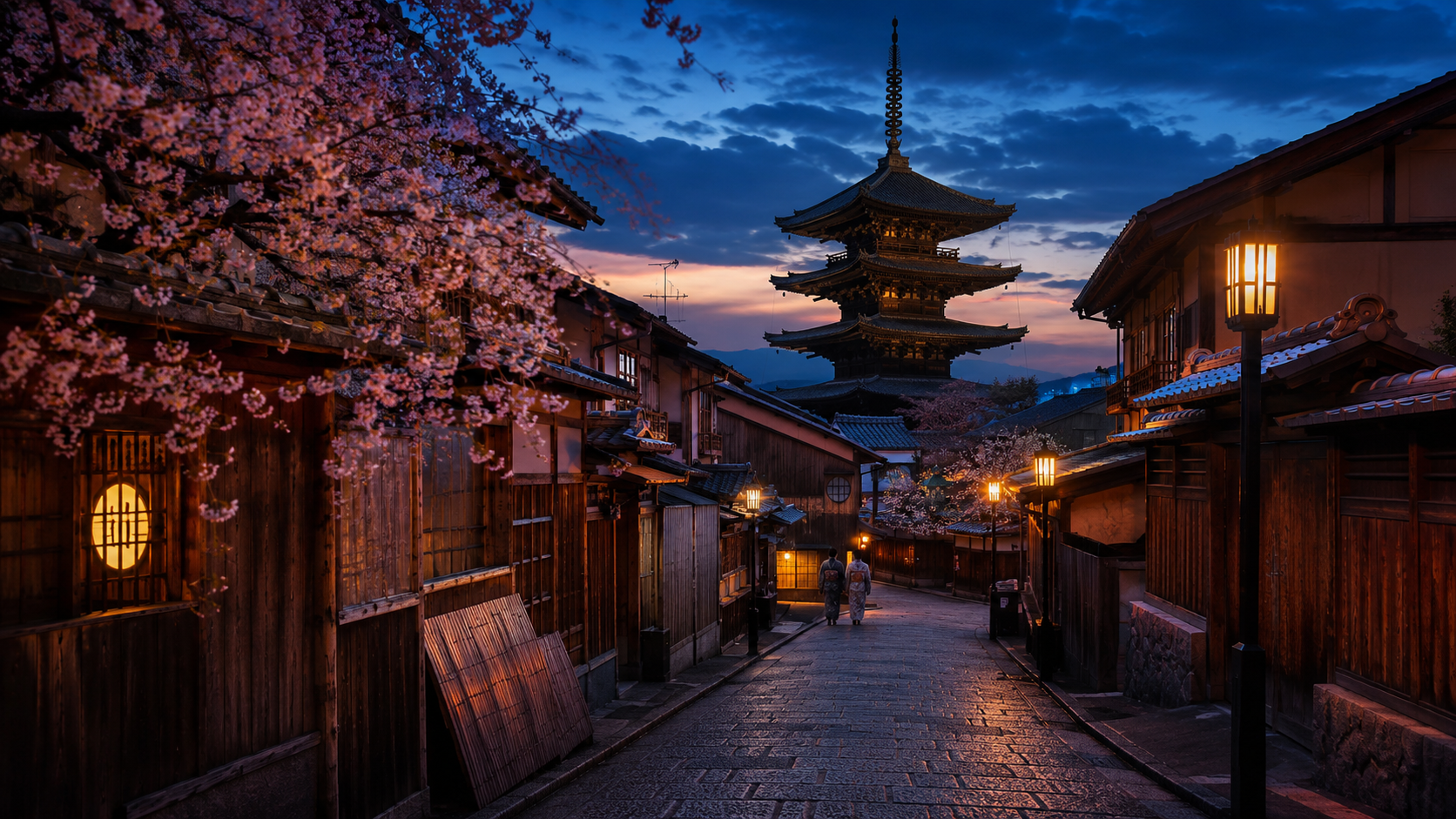
A guide to temples at golden hour, cherry-blossom walks, and the slow lunch in Kyoto you didn't know you needed. Written for travelers who want to feel the city rather than tick it off a list.
Kyoto, Japan · 10 min read
Somewhere on the stone slope below Kiyomizu-dera, maybe an hour before the city goes dark, the crowds thin just enough and the light turns the colour of a paper lantern. The temple gates are vermillion. The rooftops below are grey and close together. You stop walking for a moment. That is the Kyoto you came for.
This guide is for travelers who want that moment. A considered few days in one of the world's most beautiful cities, anchored in Higashiyama, honest about the crowds, and built around the idea that the best Kyoto experiences need room to happen.
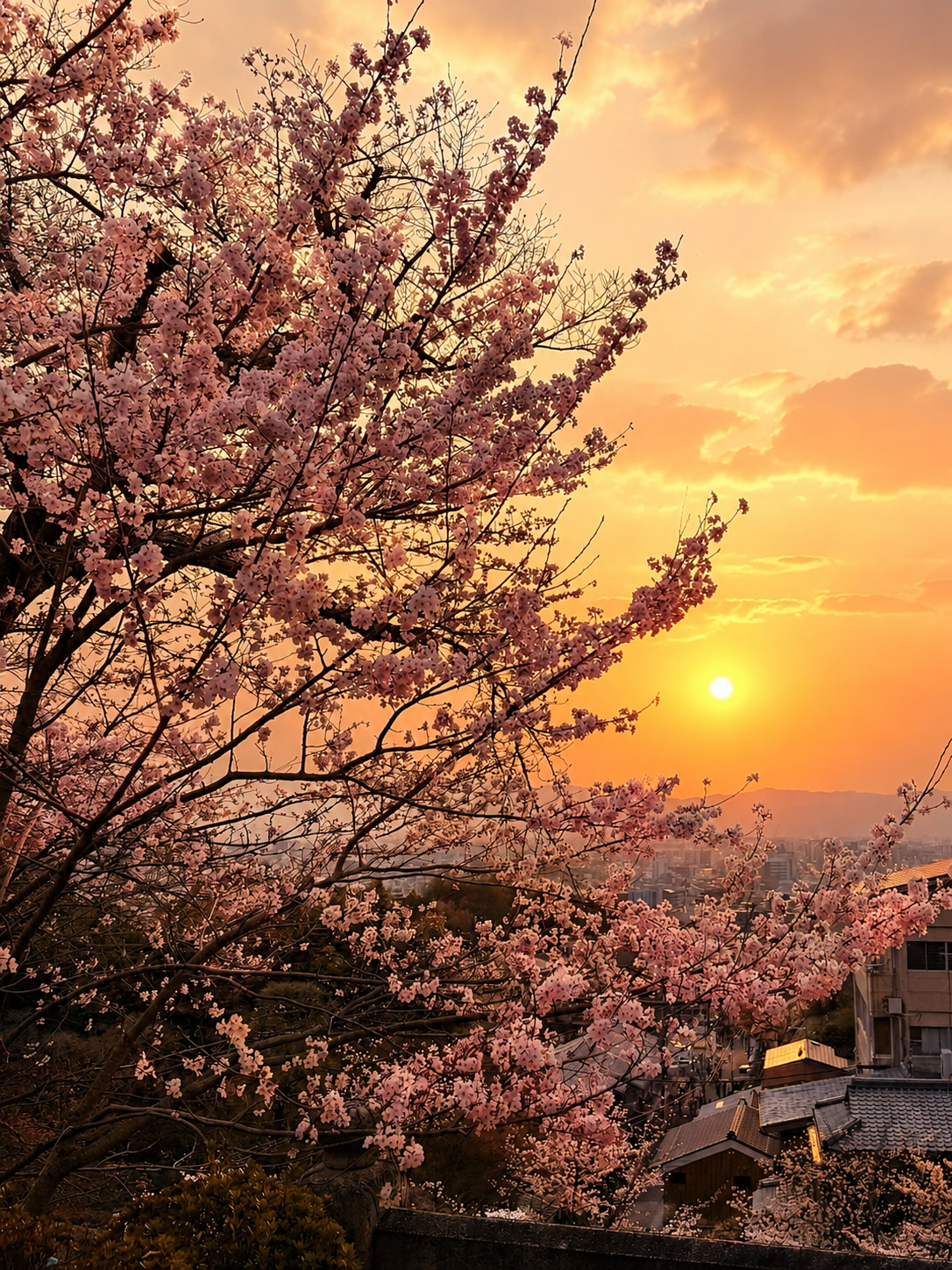
Golden hour from the Kiyomizu-dera complex. The climb is worth it.
When to go
Late March into the first days of April is the peak sakura window. The cherry blossoms are the kind of thing that, once you have seen them in person, makes you understand why people book flights a year in advance. Know what you are walking into, though: Kyoto in peak sakura is very crowded. Higashiyama on a Saturday afternoon feels like a city emptying itself toward you.
The trade is worth it. Manage it with timing: arrive at major sites early in the morning or in the late afternoon, when the light is better anyway. The Philosopher's Path at night, lit by cherry blossoms over a dark canal, is a different experience from the daytime scrum.
If the crowds are a hard constraint, mid-to-late November is a strong second choice. Autumn foliage in Kyoto is less photographed than the sakura and no less beautiful. Reds and golds instead of pink and white, and slightly thinner crowds at the major temples. Spring wins on emotional impact; autumn wins on manageability.
Avoid Golden Week (late April through early May) unless you have no alternative. It is not a Kyoto experience.
Orient yourself
Higashiyama is the emotional center of Kyoto for most first-time visitors, and for good reason. The hillside district east of the city center holds the highest concentration of wooden machiya townhouses, stone-paved alleys, and temples of anywhere in Japan. Kiyomizu-dera anchors its upper end; the Sannenzaka and Ninenzaka slopes descend south from there through a mostly-intact Edo-period streetscape. Gion borders it to the west. Give Higashiyama at least a full afternoon. Longer if you can, and ideally timed to arrive well before sunset.
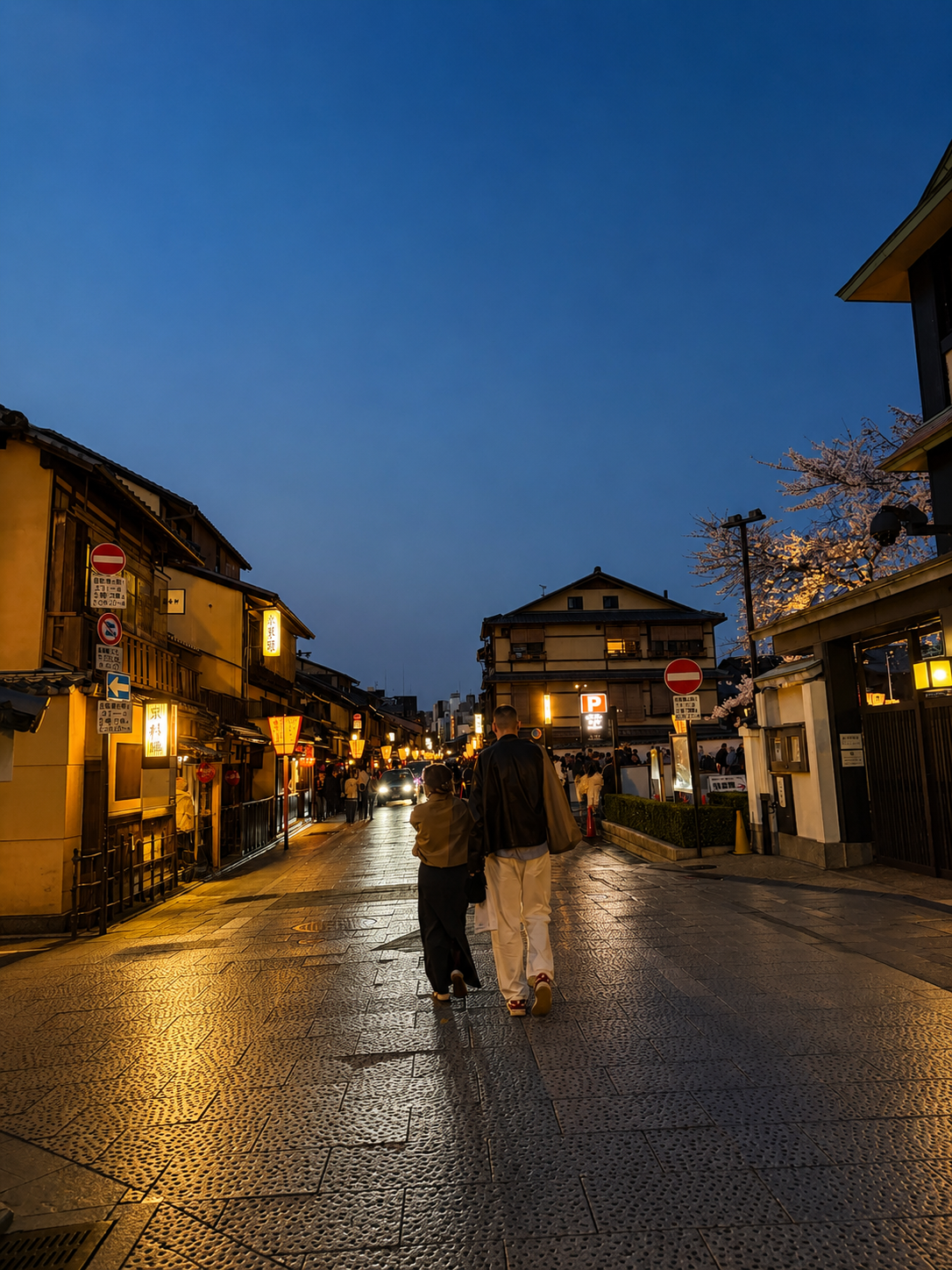
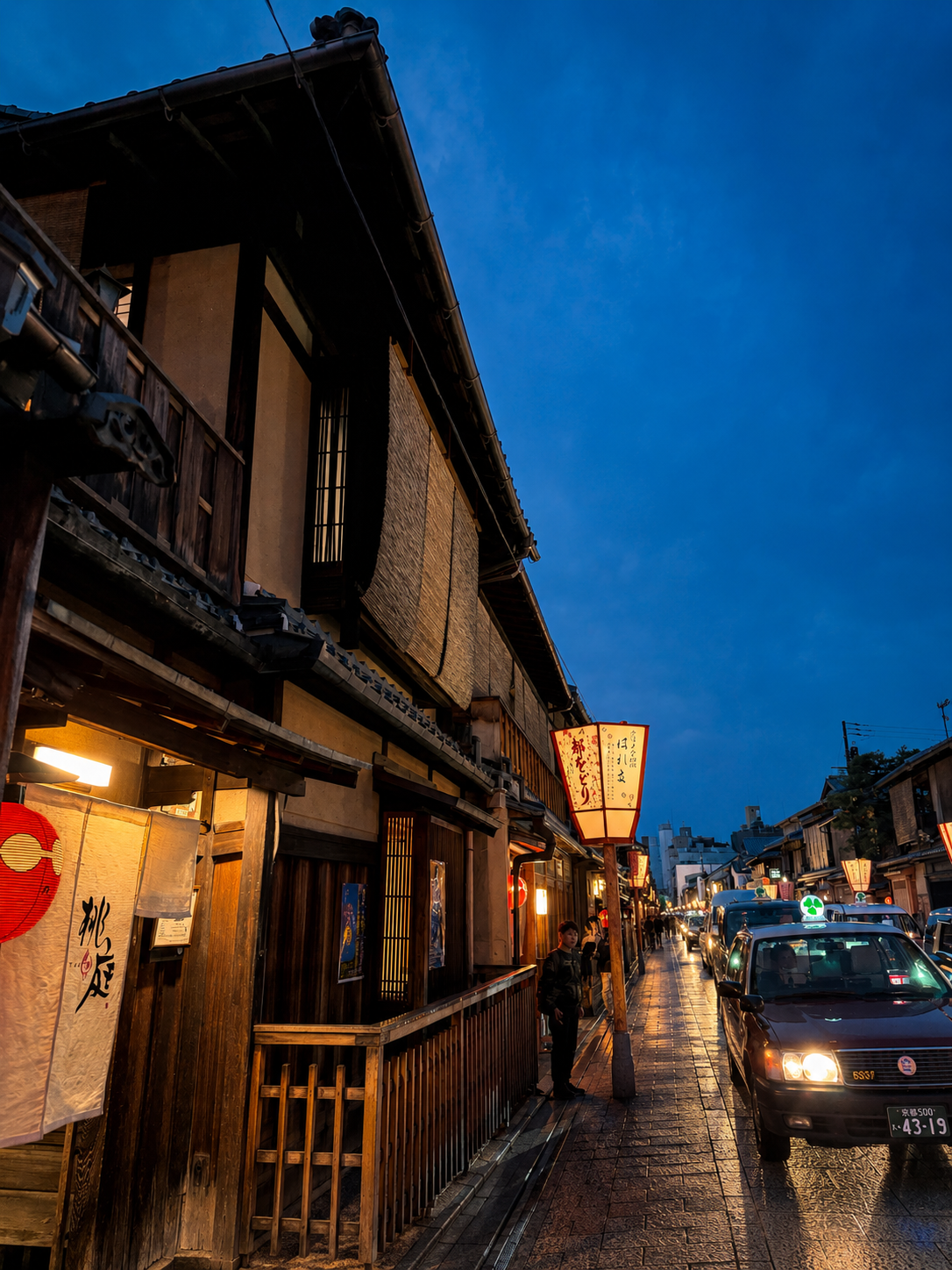
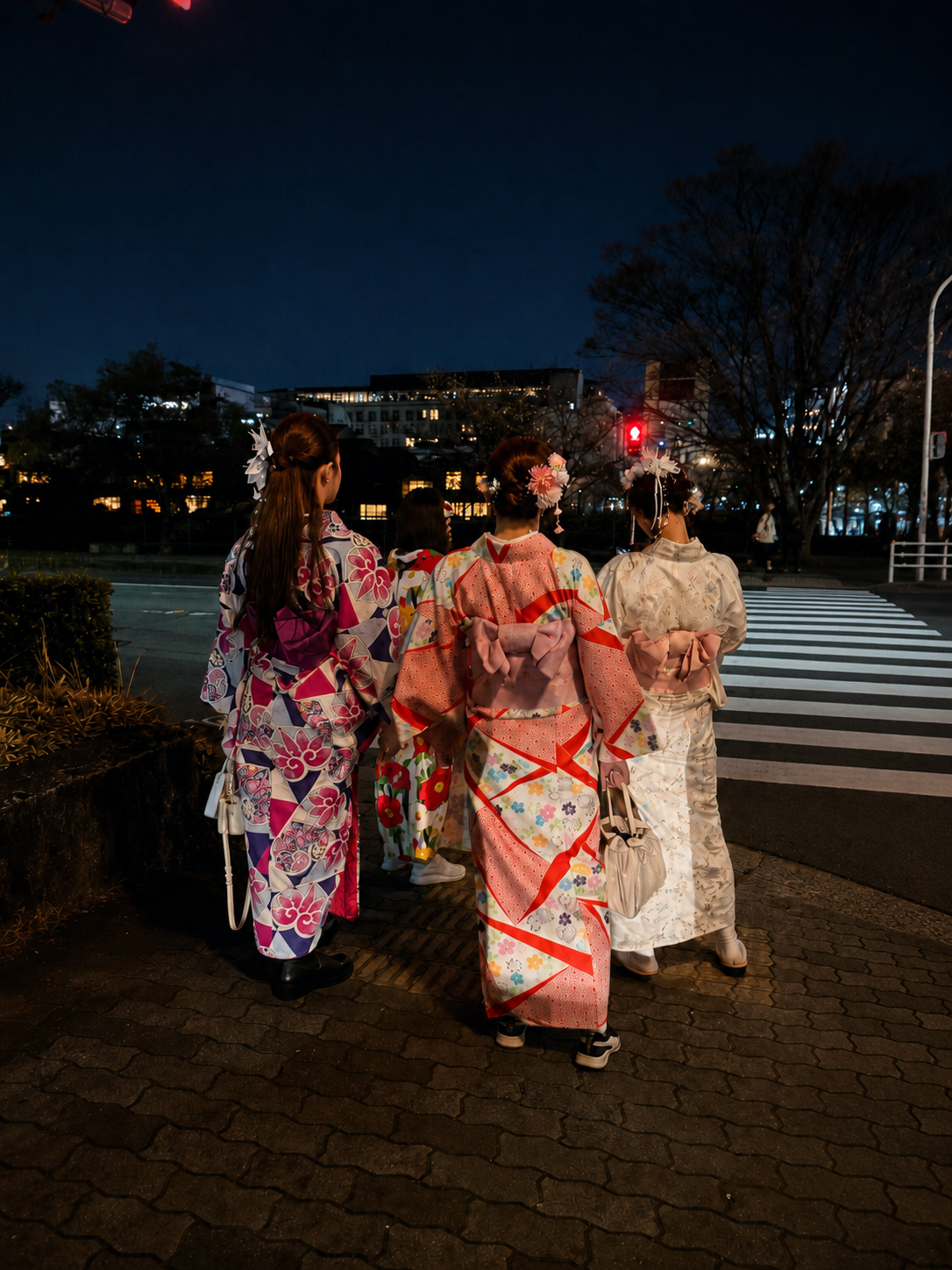
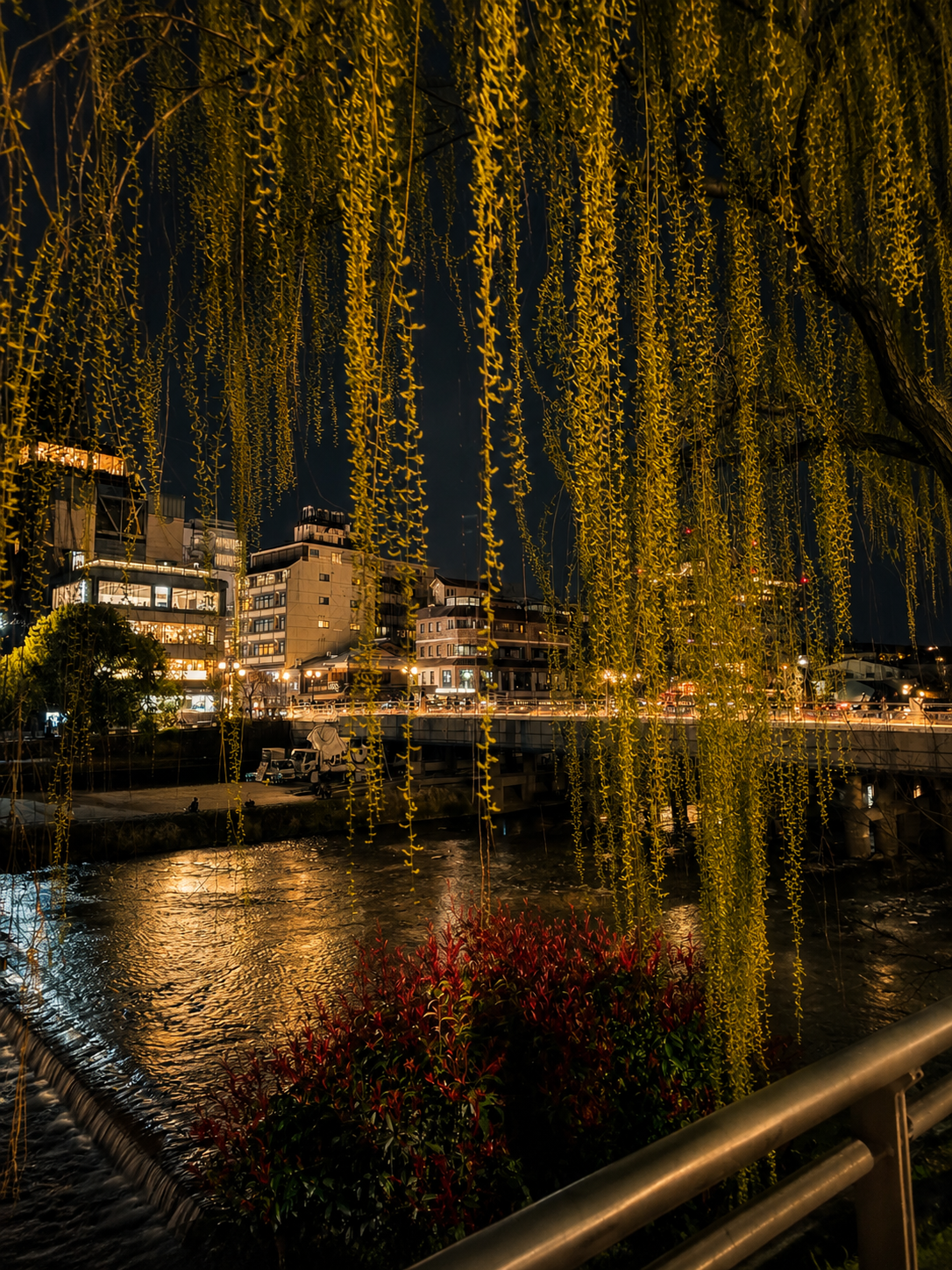
Gion is where old Kyoto persists into the evening. The main Hanamikoji street is well-known and well-photographed; its side streets and the Shirakawa canal area, where willows trail over the water and lantern-lit facades lean over narrow lanes, are quieter. Gion is less a sightseeing destination than an atmosphere. Wander it toward dusk. The canal at blue hour, with the lights coming on one by one, will slow your pace without you noticing.
Central Kyoto, around Kawaramachi and Sanjo, is the practical anchor. This is where the dining is concentrated, where the evening options are, and where the transit connections are easy. It doesn't feel ancient in the way Higashiyama does, but it's the right base: close enough to Gion and Higashiyama to walk, with good restaurant density for evenings when you want to stay close. If it's your first time in Kyoto, base yourself somewhere in this triangle rather than at a station-area hotel. The proximity to the old city changes how the days feel.
What to do
Kiyomizu-dera and the Sannenzaka descent
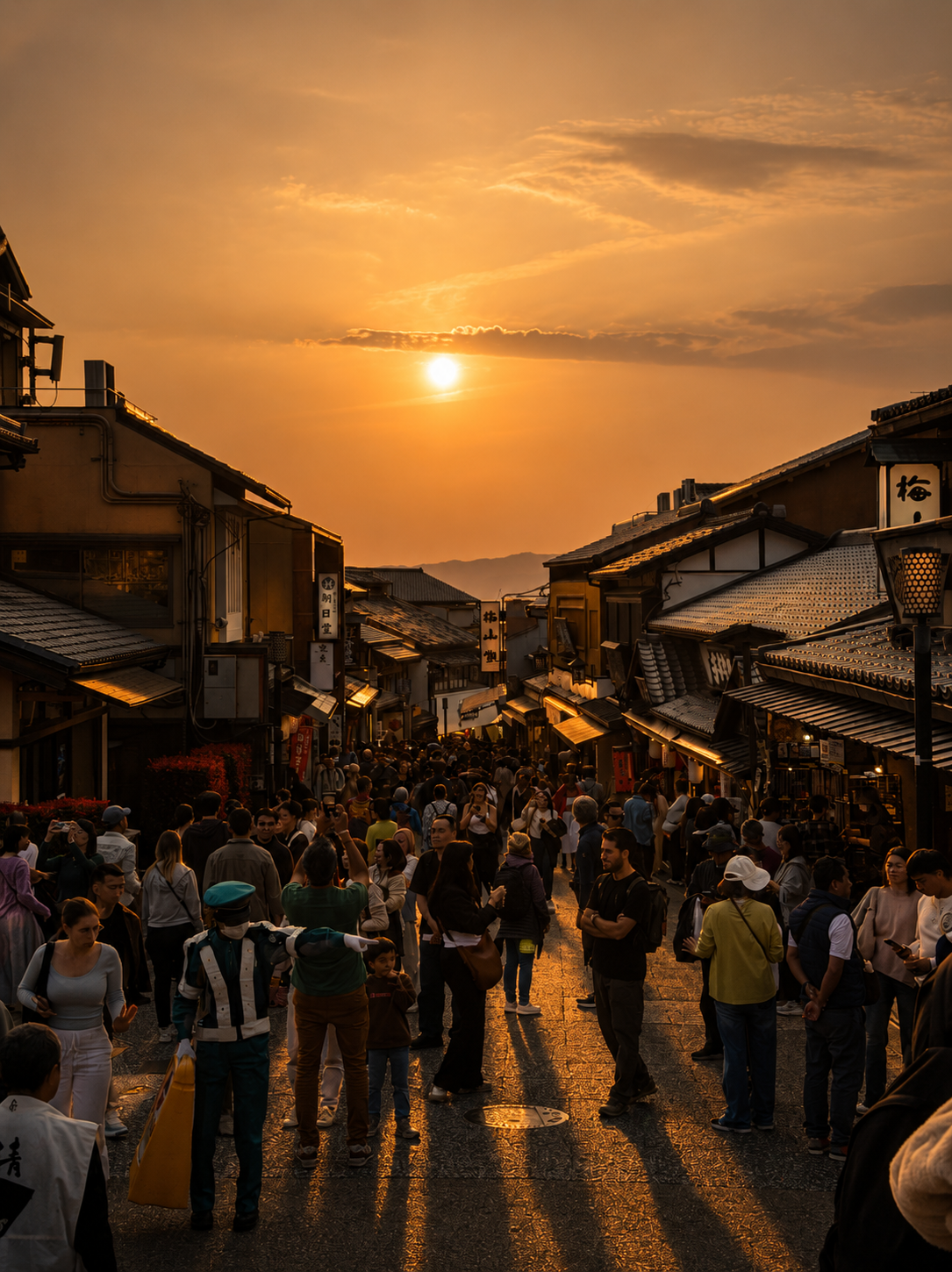
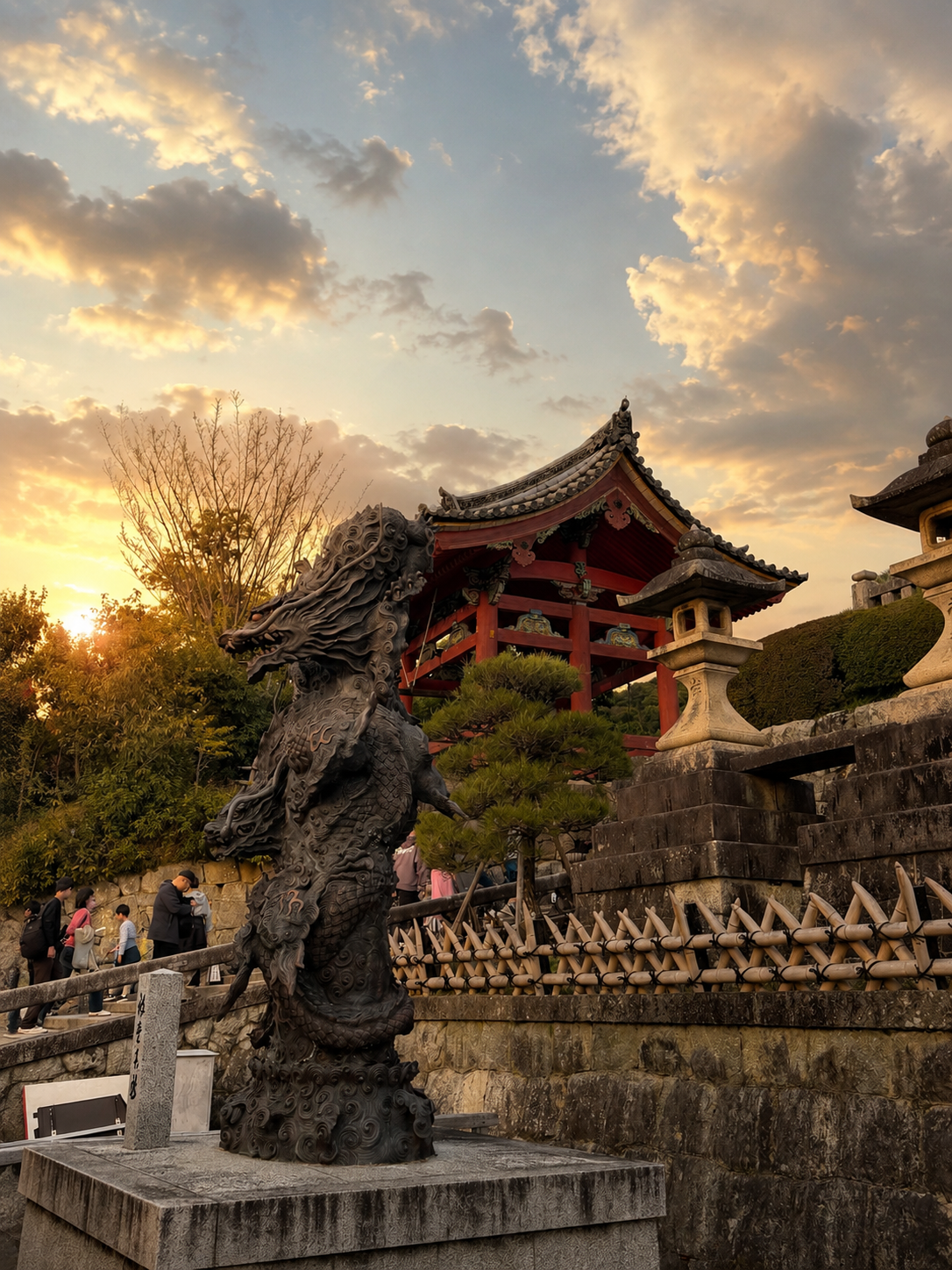
The approach to Kiyomizu-dera matters as much as the temple itself. Walk up through the Ninenzaka and Sannenzaka slopes, stone-paved, lined with two-storey wooden shops and houses, compressed enough that you lose the city noise, and arrive at the main gate complex as the afternoon softens. Spend time at the dragon sculpture in the courtyard before moving to the terrace. Come back down through Sannenzaka as the sun drops. That's the steep, crowd-thinned section of the descent where the light goes orange and the city looks, briefly, like it did a hundred years ago.
Fushimi Inari
The thousand torii gates of Fushimi Inari are one of Japan's most recognizable images, and the reality is better than the photograph. Take the Keihan line or the JR Nara line from Kyoto Station; it's a short ride south. The lower section, the first ten minutes up the mountain, is busy. Go anyway, and keep walking. The crowds thin quickly as the path climbs and forks, and the deeper you go, the more the gates feel like something strange and worth following. A full walk to the summit and back takes a few hours; the lower section alone is worth thirty minutes even if you don't continue.
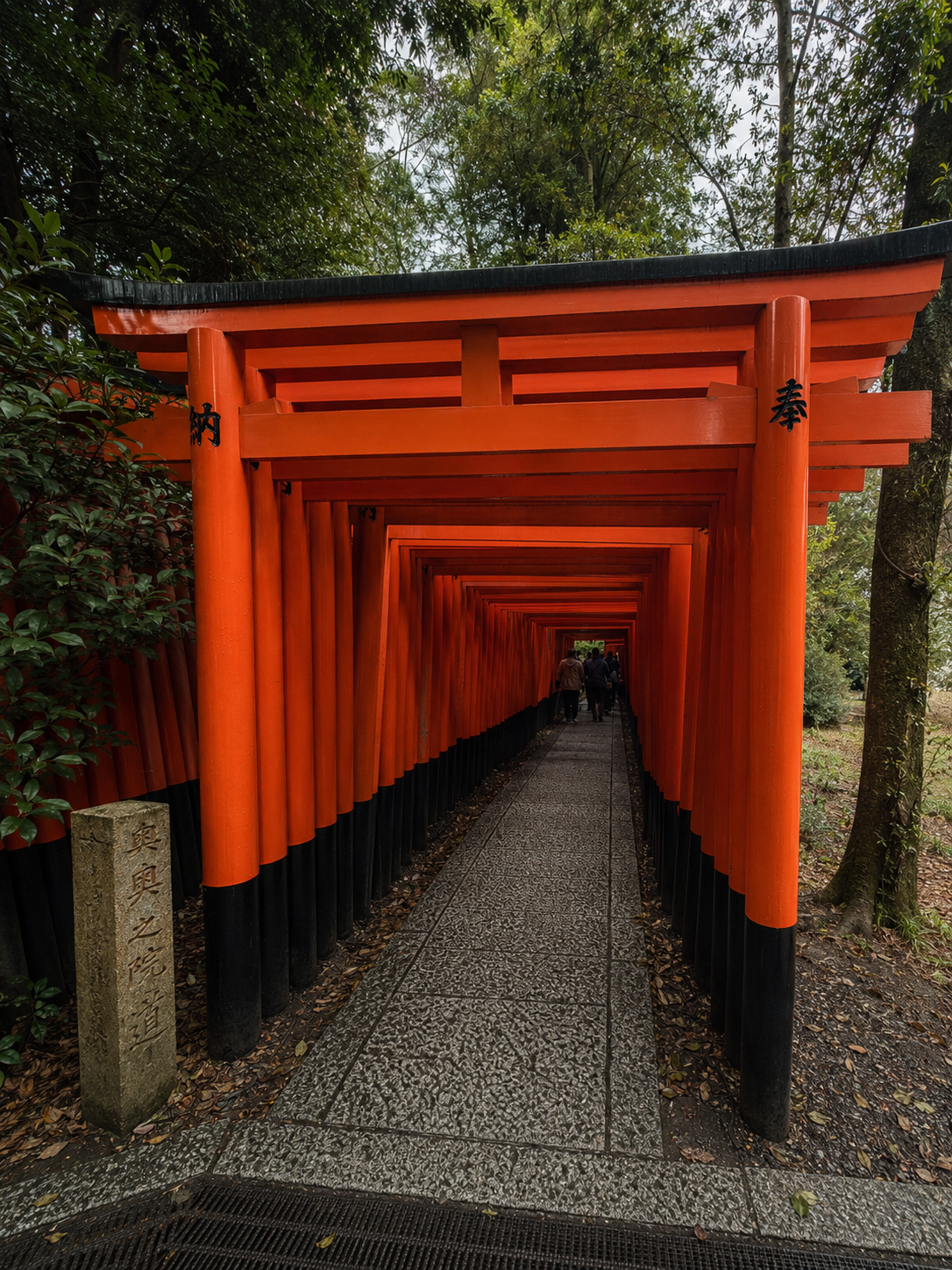
The lower approach to Fushimi Inari. The gates keep going, so keep walking.
The shrine with ema plaques
Kyoto's smaller shrines, the ones that aren't on the main temple circuit, sometimes land harder than the famous ones. Look for the one with walls of wooden ema prayer plaques, red lanterns, and a weeping cherry in the courtyard. You'll stay longer than you intended.
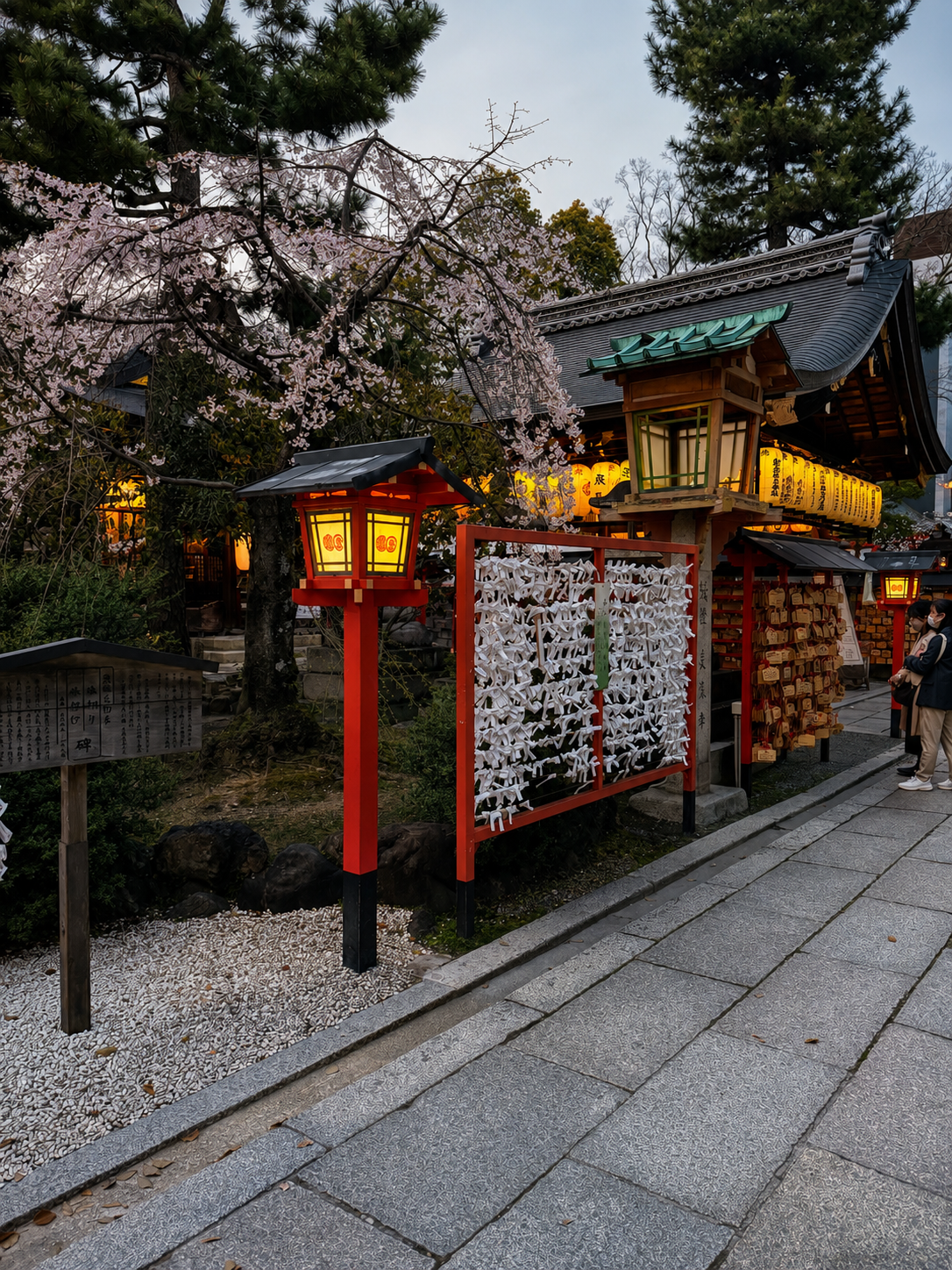
A shrine prayer wall at dusk. Off the main circuit, and worth finding.
Cherry-blossom walks
Three places, in rough order of how different they feel from each other:
The Philosopher's Path (Tetsugaku-no-Michi) is the classic sakura walk, and it delivers. A canal-side path, cherry trees meeting overhead, a slow crowd of people all slightly quieter than usual. Go in the morning for space. At night, when the blossoms are lit from below and the canal goes dark around them, it's a different place entirely.
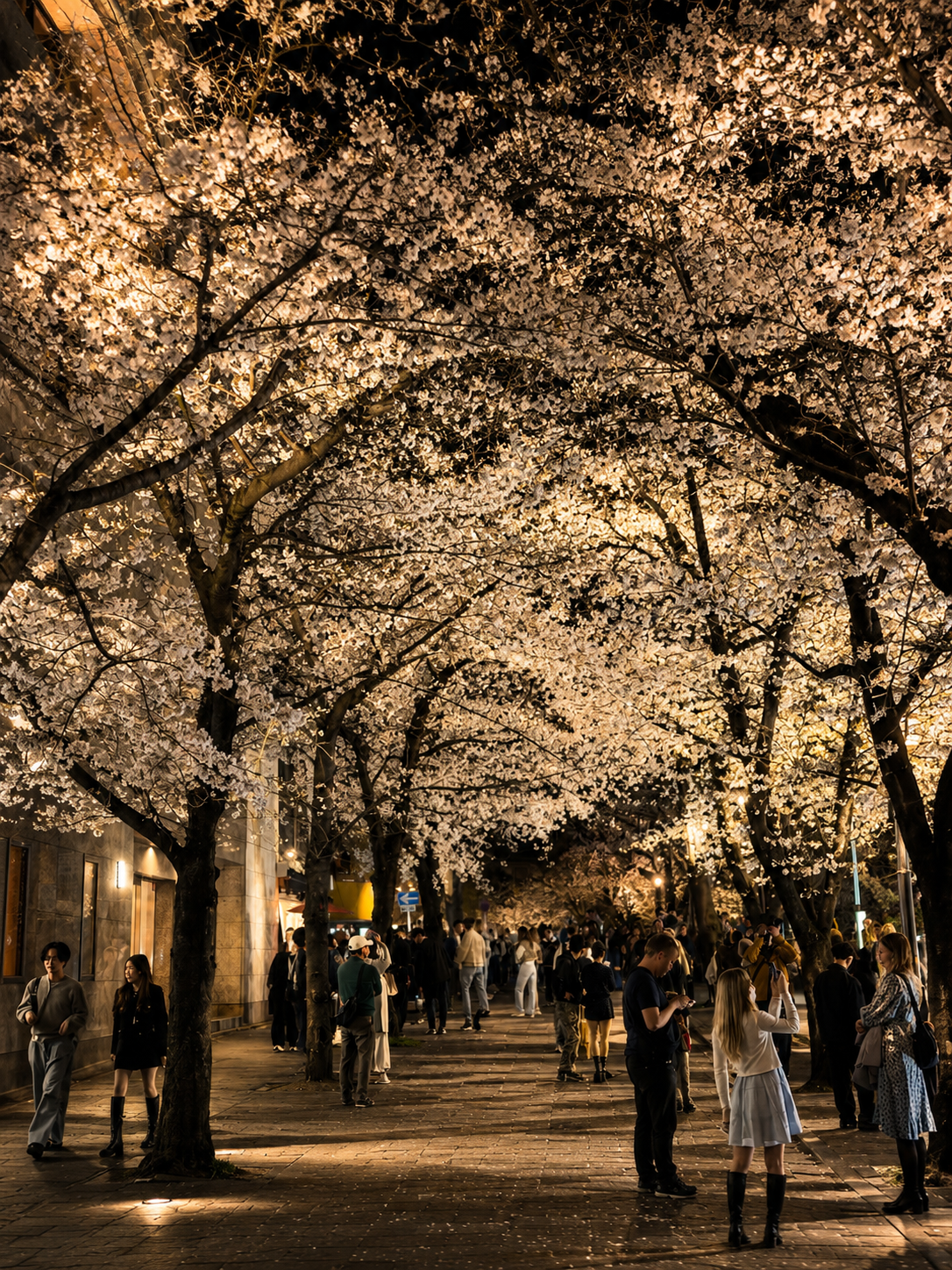
The Philosopher's Path at night during sakura season. The photograph doesn't oversell it.
Gion Shirakawa is the canal-and-blossom combination at its most cinematic. Old buildings on one side, water on the other, cherry branches arching over both. Come toward evening when the lanterns are lit and the crowds have moved on to dinner.
Higashiyama generally. The area around Kiyomizu-dera and the slopes below it has enough cherry trees scattered through it that the sakura becomes ambient rather than a destination. Temple gates and pink branches in the same frame. It's the most woven-together blossom experience in the city.
Gion, after dark
Where to eat and drink
Saryo Tesshin: the lunch to slow down for
The meal that most changed how the rest of the trip felt. Saryo Tesshin is a Michelin-recognized ramen spot, elevated and careful, and nothing like an arranged tourist experience. A tiger mural watches over the dining room. The broth is serious. The photo shows why: a blue-and-white bowl of noodles on a dark lacquer tray, small Imari dishes on the side, a glass of white wine that turns out to be exactly right with ramen done at this level. The dishes arrive unhurried, the room stays quiet, and you look up to find an hour has gone.
Don't rush lunch in Kyoto. Pick one place that deserves the time, order the set, and stay.
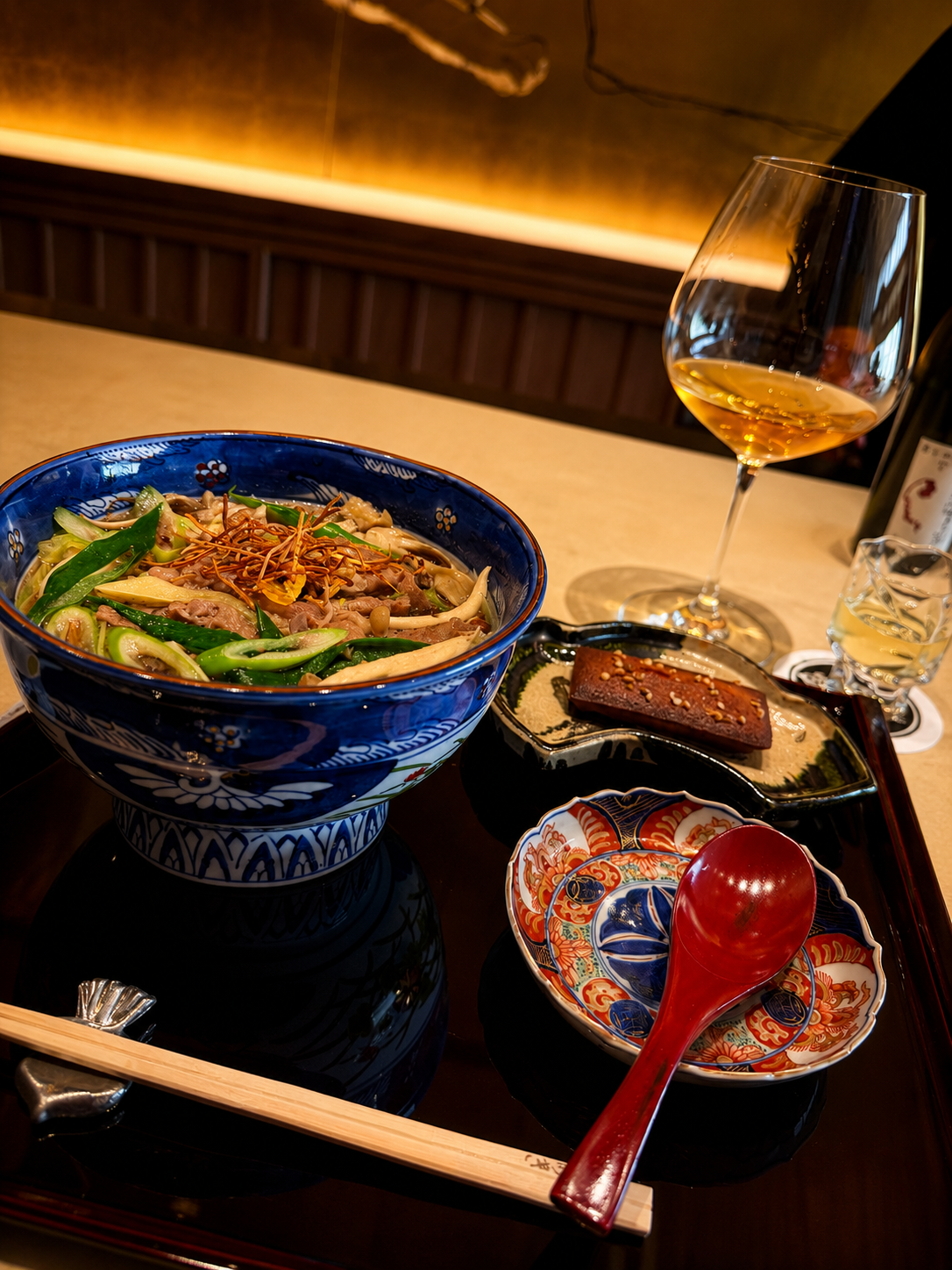
Lunch at Saryo Tesshin. White wine with ramen, which makes more sense than it sounds.
Tominojo: wagyu, sukiyaki and shabu-shabu
An evening built around marbled beef. At Tominojo the chef presents the wagyu before it goes over a steaming hot pot, sukiyaki or shabu-shabu, and the table slows to match it. Save this for a night when you have nowhere to be after.
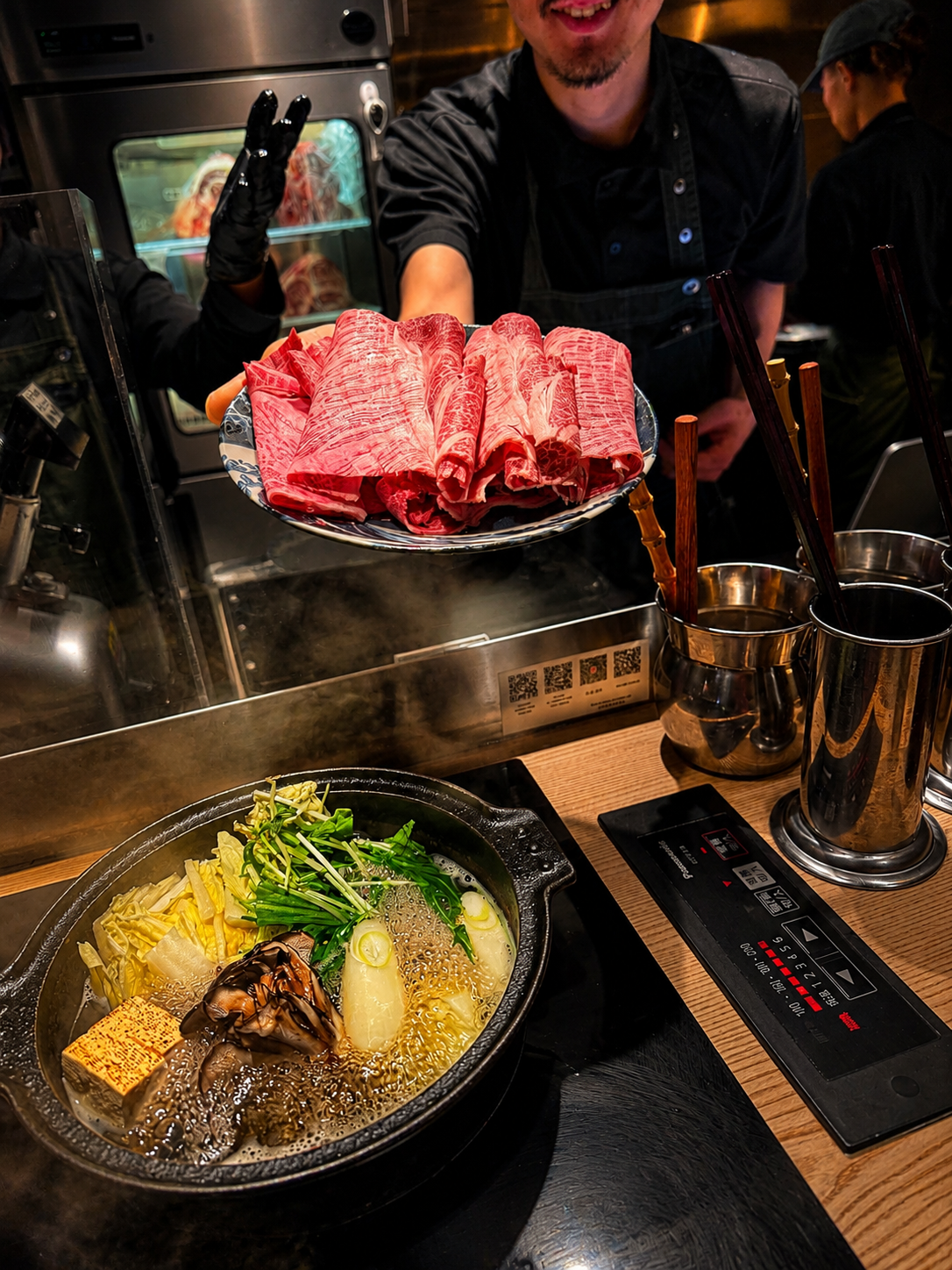
Wagyu over the hot pot at Tominojo. A correct Kyoto evening.
Bar Cordon Noir
A wooden bar, backlit bottles, and the particular quiet that good Japanese bars know how to hold. Bar Cordon Noir is an after-dinner room. One well-made drink, and you won't want a second.
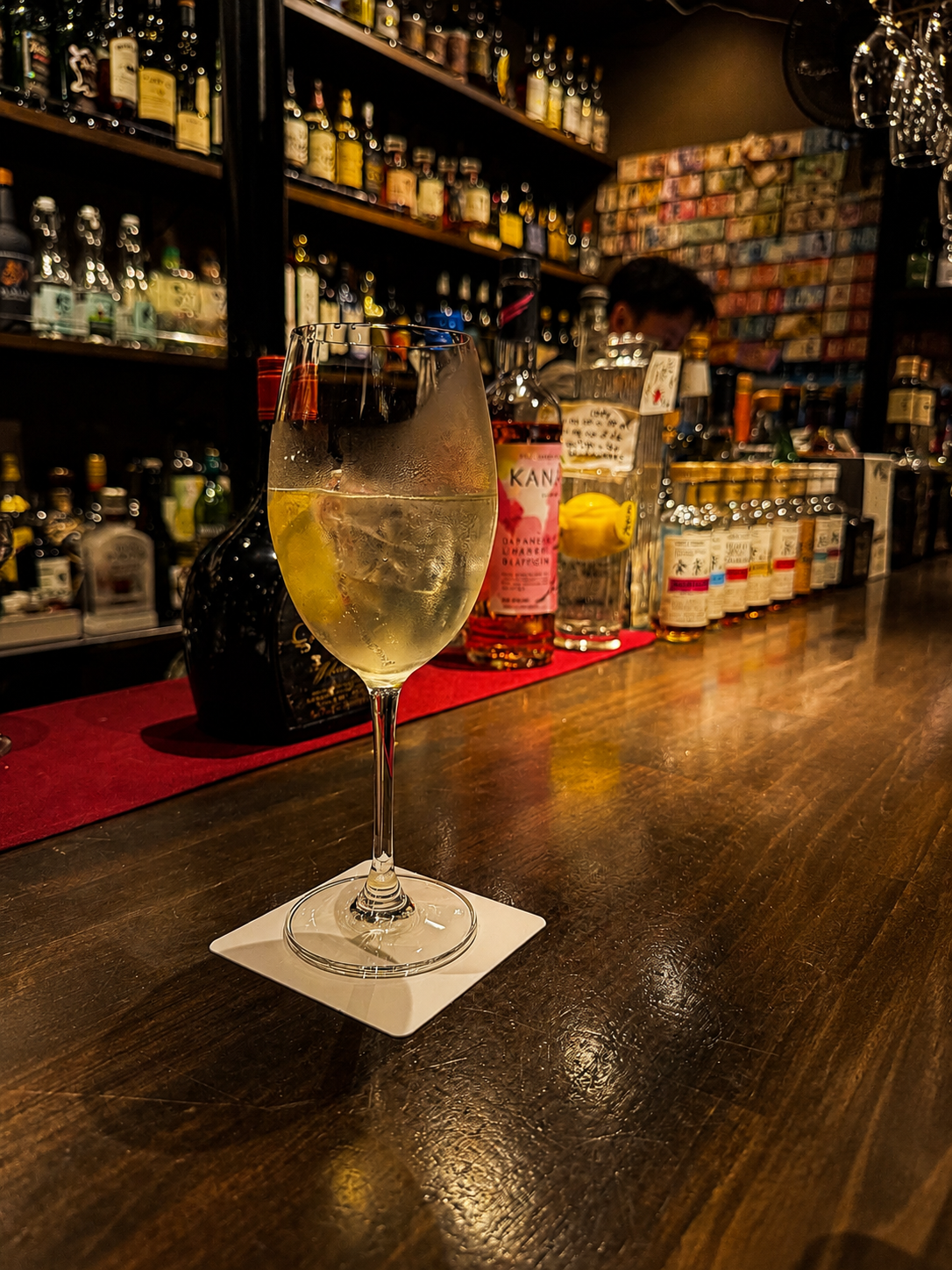
Bar Cordon Noir. One drink is the right amount.
Café culture
Kyoto rewards slowing down, and nowhere more so than in its cafés. Find one in the hour after a temple walk, order coffee and something small, and let the morning settle. Don't fill this time with logistics.
Links marked "View on partner" below are affiliate links. Voyabello earns a small commission if you book through them, at no extra cost to you.
Partner · Booking.comView stays near Higashiyama and Gion on Booking.com
· handoff activating soonAffiliate link · Voyabello may earn a small commission, at no extra cost to you.Day trip: Himeji
Go. It is one of the most visually complete places in Japan, and the shinkansen takes roughly an hour from Kyoto. Easy as a day trip if you leave early.
Himeji Castle is the reason to go. The white facade, photographed against a sky full of pink cherry blossoms, is the rare landmark that looks more extraordinary in person than in photographs. The scale and the condition of the castle, which survived the Second World War intact, give it a weight that most historic sites don't have. Walk through it slowly. The gates open early; if you can be there by 9am you'll see it without the midday crowd.
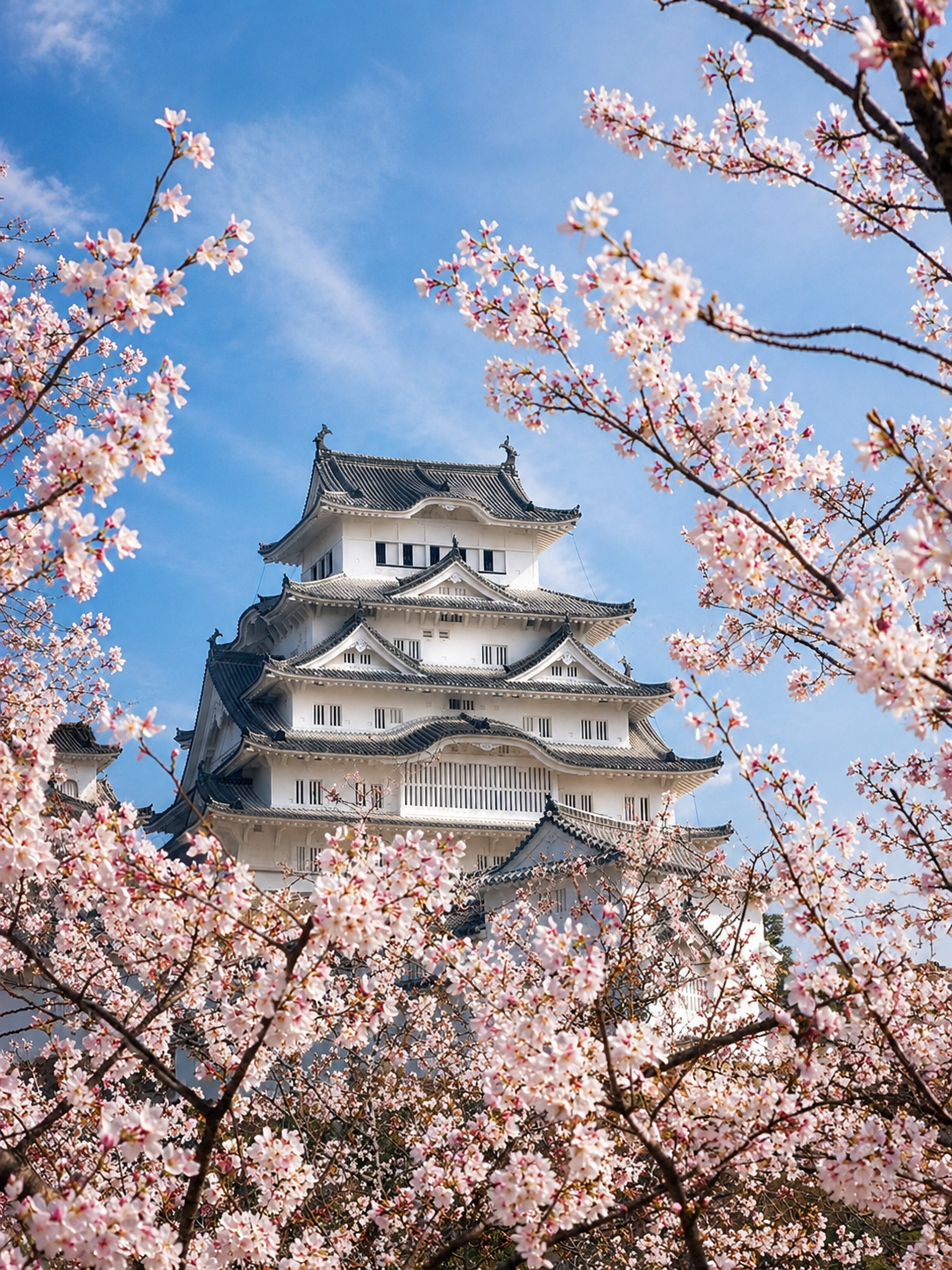
Himeji Castle in bloom. More striking in person than any photograph prepares you for.
Koko-en Garden, immediately alongside the castle, is the right second stop. Quieter, shaded, with koi ponds and weeping cherries and a bamboo grove worth walking to the end of. A good place to decompress after the castle crowds.
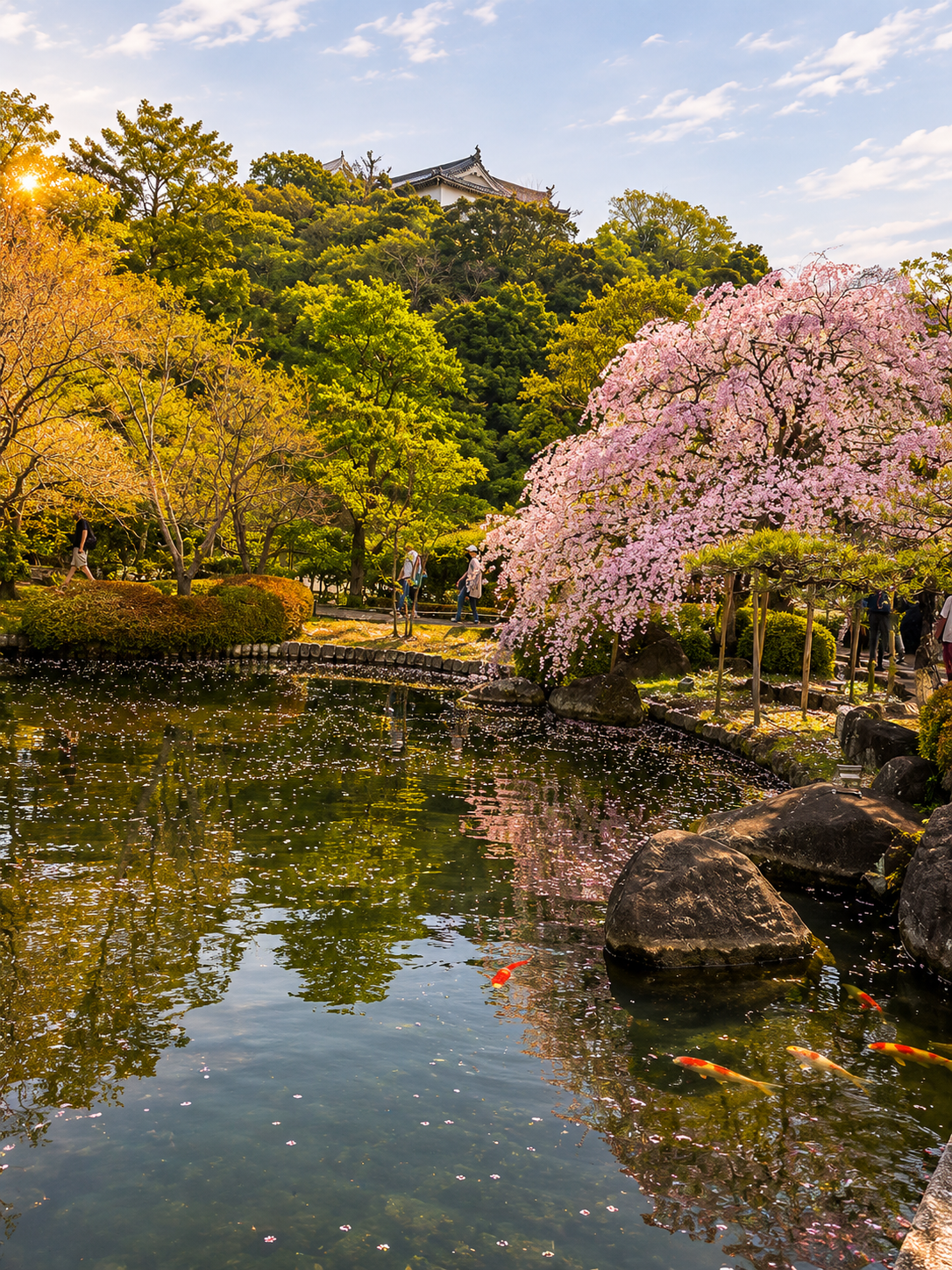
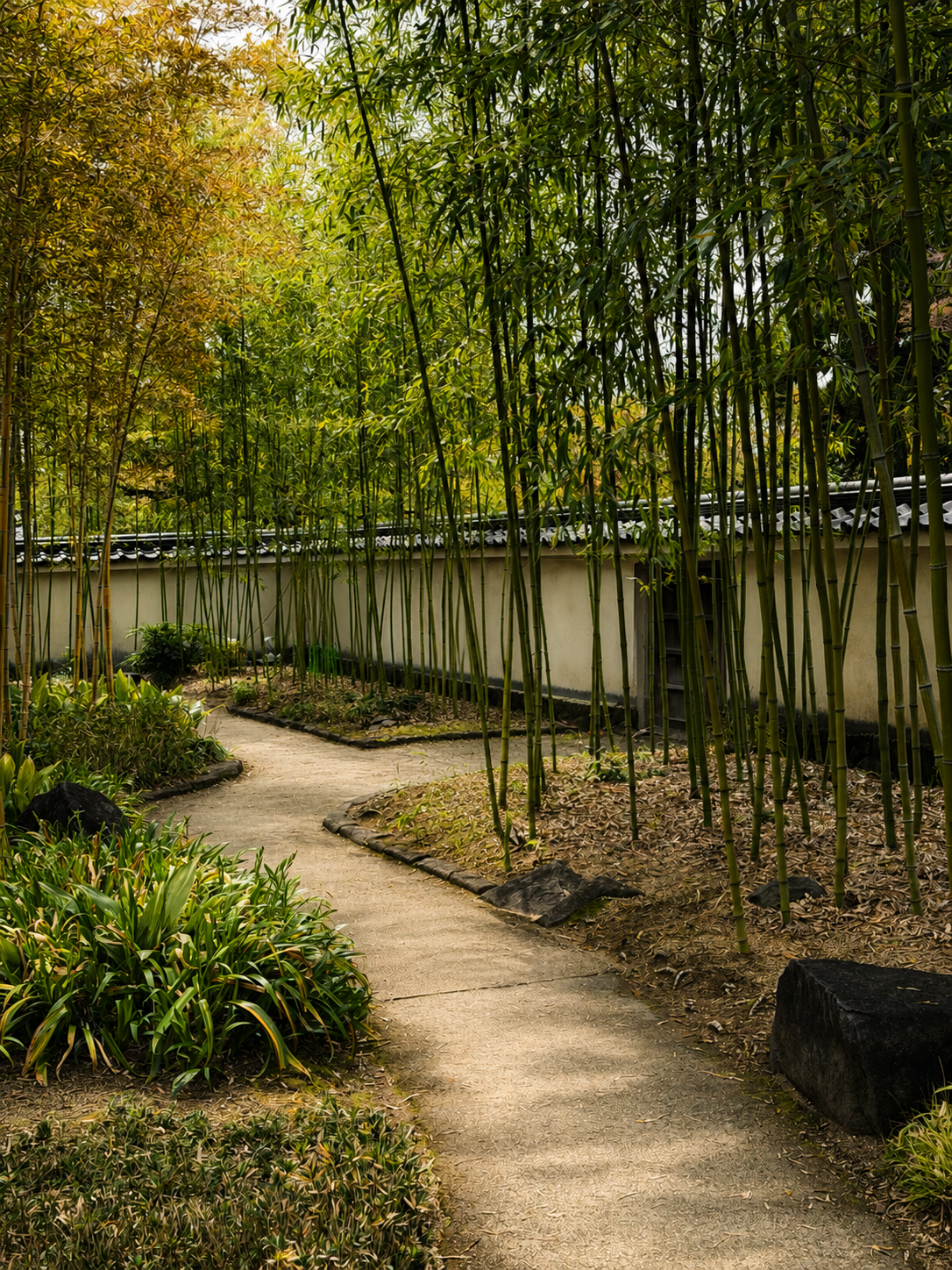
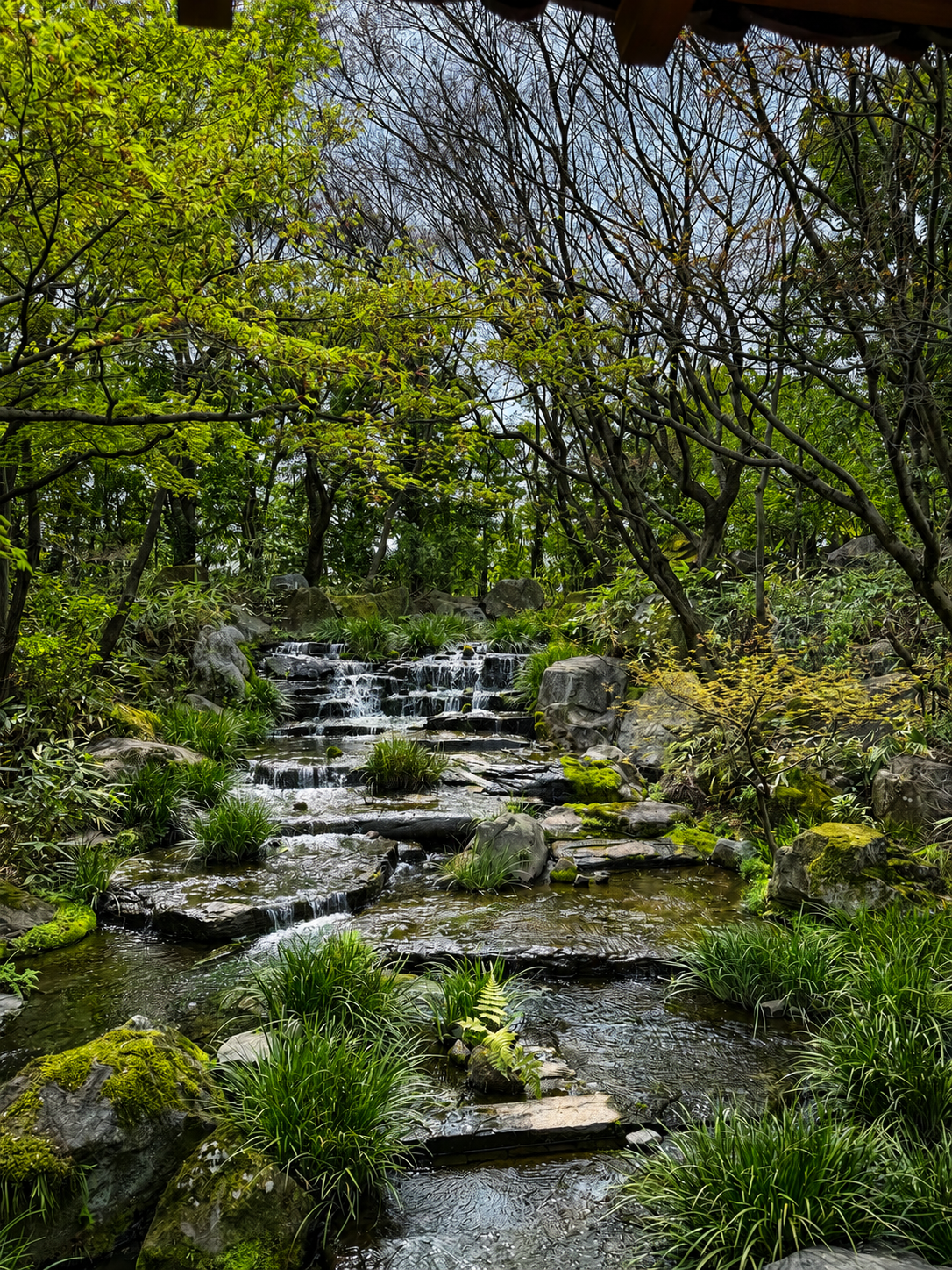
How to do it well: take an early shinkansen and arrive before the castle crowds build. Don't add a third or fourth stop. The castle and garden are the experience. A focused half-day here is better than a rushed full one.
The affiliate link below is an inactive placeholder, marked for activation once the Viator account is approved.
Partner · ViatorFind Himeji day tours from Kyoto on Viator
· handoff activating soonAffiliate link · Voyabello may earn a small commission, at no extra cost to you.Practical notes
Getting around. Kyoto's central historic areas, Higashiyama, Gion, the Philosopher's Path corridor, are walkable from each other if you have the time and inclination. City buses fill the gaps; the IC card (Suica or ICOCA) covers buses, subway, and the shinkansen to Himeji. Fushimi Inari is a short ride south on the Keihan line or the JR Nara line from Kyoto Station. Walking is almost always the better choice when it's an option.
Where to base yourself. Central Kyoto, the triangle between Kawaramachi, Sanjo, and Gion, is the right address for a first visit. Easy access to Higashiyama and Gion, good evening options within walking distance, transit connections that don't require a trip to Kyoto Station first. Station-area hotels are cheaper and convenient for bullet trains, but they remove you from the part of the city you came to see.
Crowds. Peak sakura in late March and early April is busy. Everything is busy: the temples, the Philosopher's Path, Sannenzaka. The solution is timing: arrive early (before 9am at major sites, before the tour groups), or late (the last hour before closure, or after dinner). The city at 7am during sakura season is a different place.
Verify before you go. Temple hours and seasonal entry fees change. Some popular areas require advance booking during peak seasons. Check current details directly before your visit. Things that are open today may not be open in the same configuration when you arrive.