

A ten-day road trip through Florence, Siena, Chianti and the Val d'Orcia, and why the best of Tuscany kept showing up on the roads between the famous names.
Tuscany, Italy · 10 min read
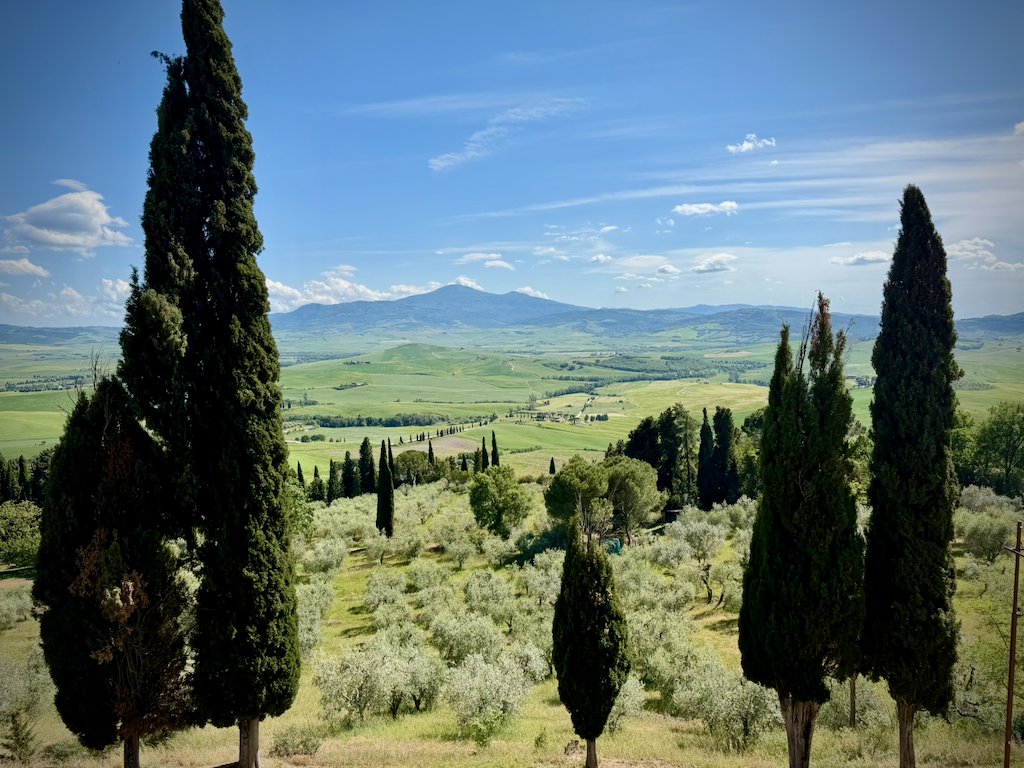
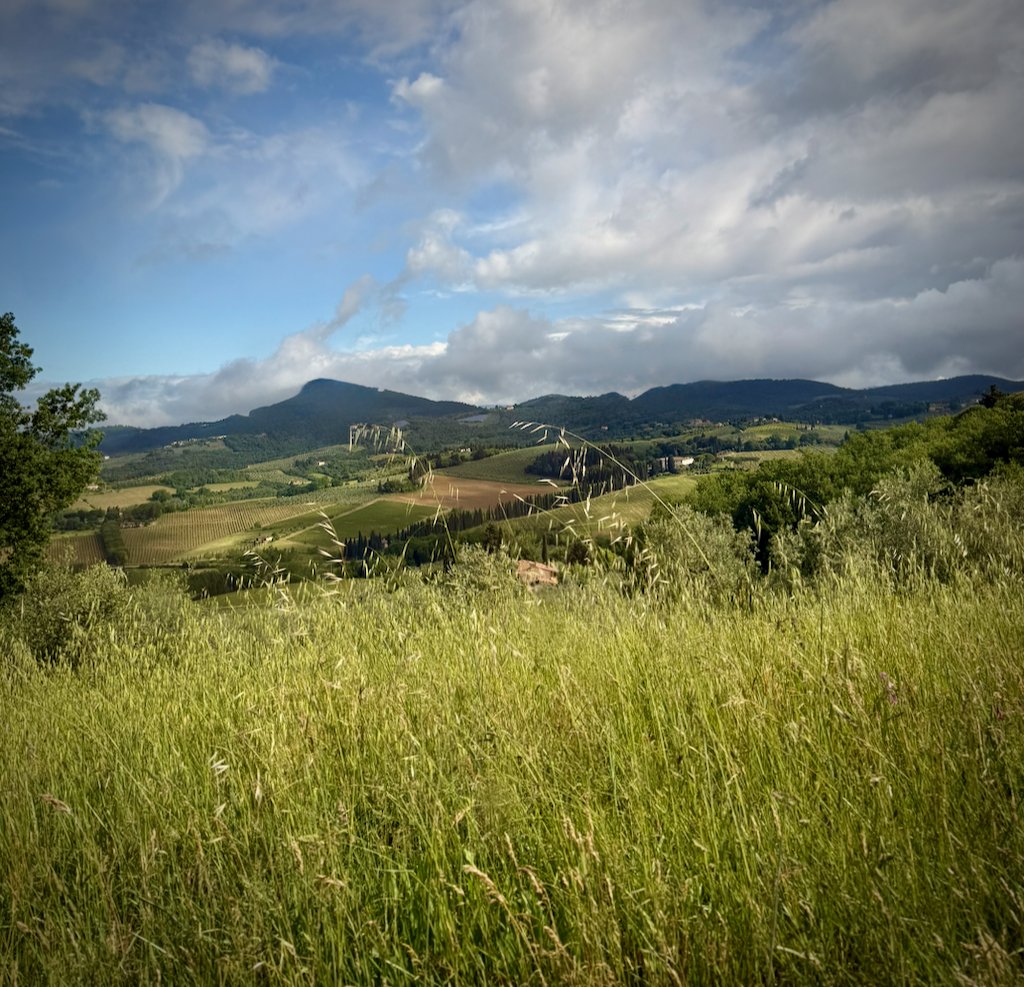
We flew into Milan with a list. Florence, Siena, Chianti, the hill towns of the Val d'Orcia: the Tuscany everyone tells you to see, and rightly so. What nobody told us was that some of the strongest memories would come from the spaces between those names. Somewhere south of Siena the road starts winding through rolling green hills, past cypress trees and isolated farmhouses, and we kept pulling over because it felt wrong not to.
That became the shape of the whole trip. Rain stopped being a problem and became a reason to sit down somewhere: an espresso if it was morning, a glass of wine or a plate of pasta if it wasn't. The list mattered less each day. Tuscany rewards travelers who slow down, and this guide is the case for building a trip that lets you.
We did this in May, five adults, one rental car, ten days, with a countryside base in Chianti. Here is what we would tell a friend planning the same trip.
When to go
May was the right call and we would choose it again. It never got hot. Some days brought rain, but never the kind that cancels plans; it just moved lunch earlier or stretched a coffee longer. The countryside mornings surprised us with how cool they were. Around our base in Chianti there were mornings that genuinely required a sweater, which felt like a small price for having the roads and terraces mostly to ourselves.
The crowds were the other gift. Even at the famous stops, Florence included, we never felt that other people were diminishing the experience. Days warmed up enough for hours of walking without ever pushing us into the shade.
If May doesn't work for you, aim for the shoulder seasons on either side of summer rather than the middle of it. The whole point of this trip is being outside, on foot in hill towns and stopped along roads, and that argues for mild weather over peak season.
Orient yourself
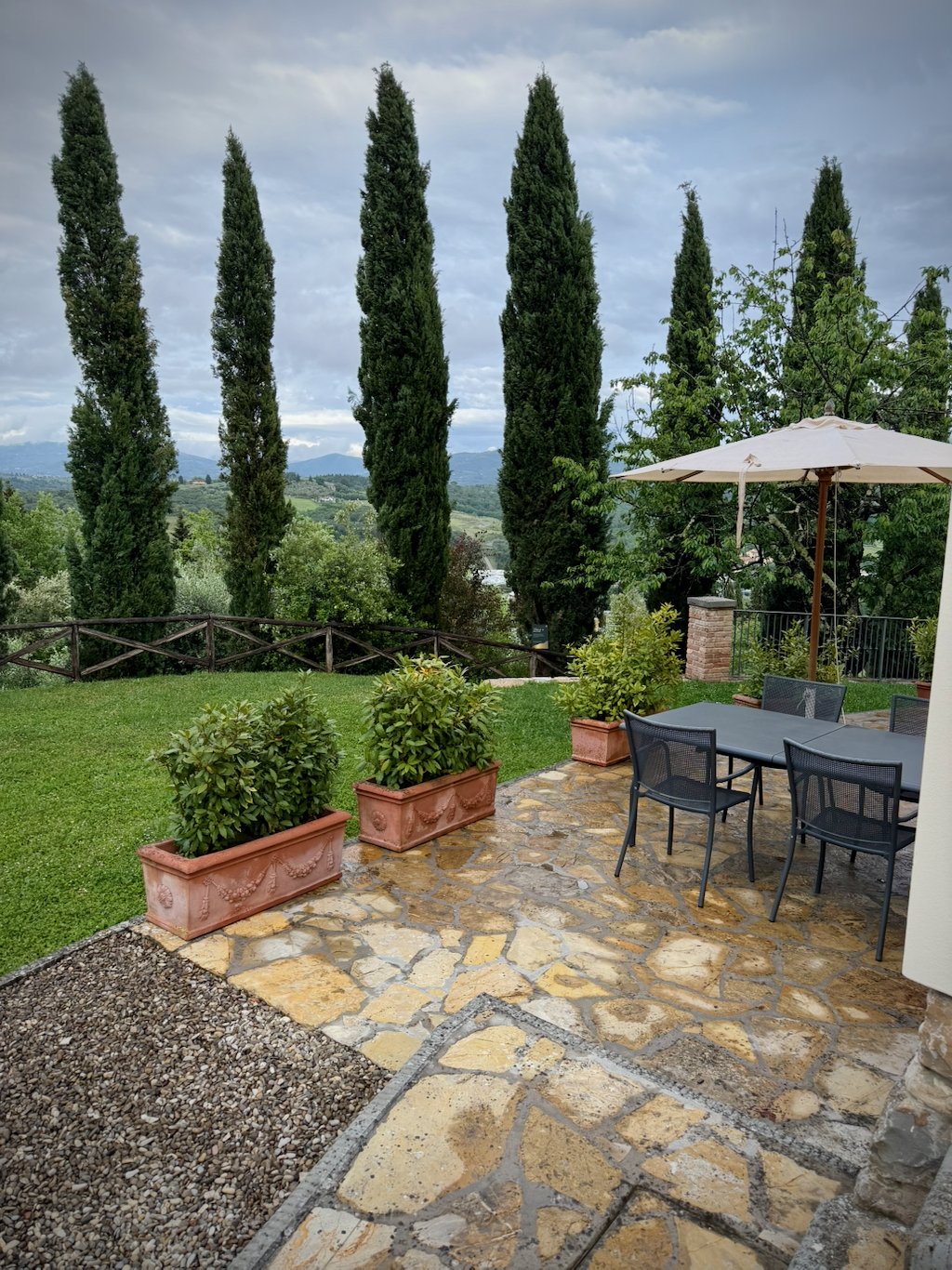
Chianti is where we based ourselves, in the countryside around San Casciano in Val di Pesa. Waking up among vineyards and driving out each day turned out to suit a group of five far better than changing hotels every two nights. If you have a car and would rather wake up in Tuscany than in a city, this is the move. The tradeoff is that the far end of the Val d'Orcia becomes a long day, and on a longer trip we would split the stay between Chianti and somewhere further south.
Florence is dense with the things you came to Italy for: the Duomo, the piazzas, the Renaissance on every corner. It is essential on a first trip, and its energy is completely different from everything else on this route. Treat it as a day trip on foot rather than a place to bring a car, for reasons covered below.
Siena was my favorite town of the trip. It keeps the intimacy of medieval Tuscany but has enough scale to feel like a real city. Piazza del Campo alone separates it from every other stop on this route.
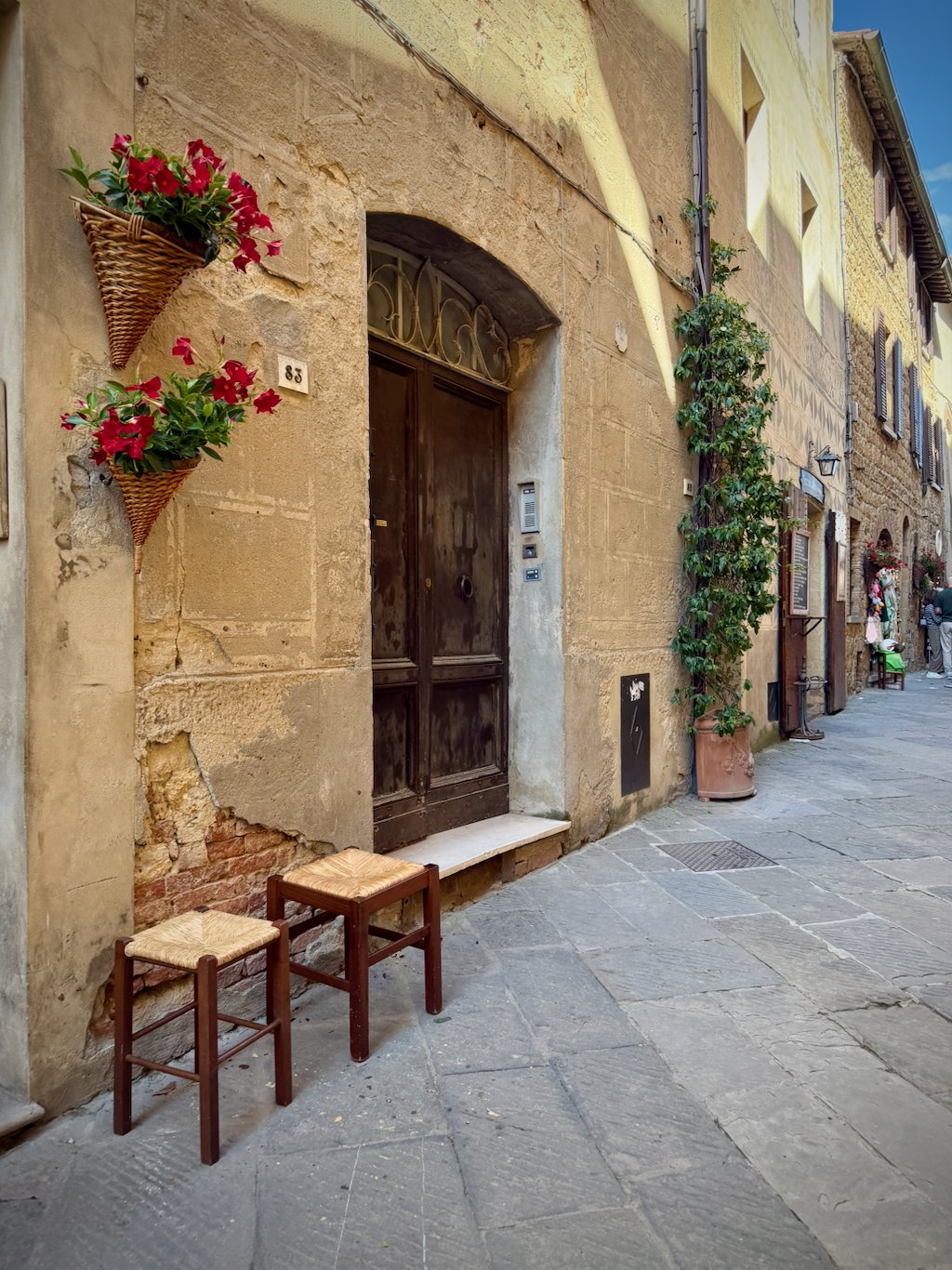
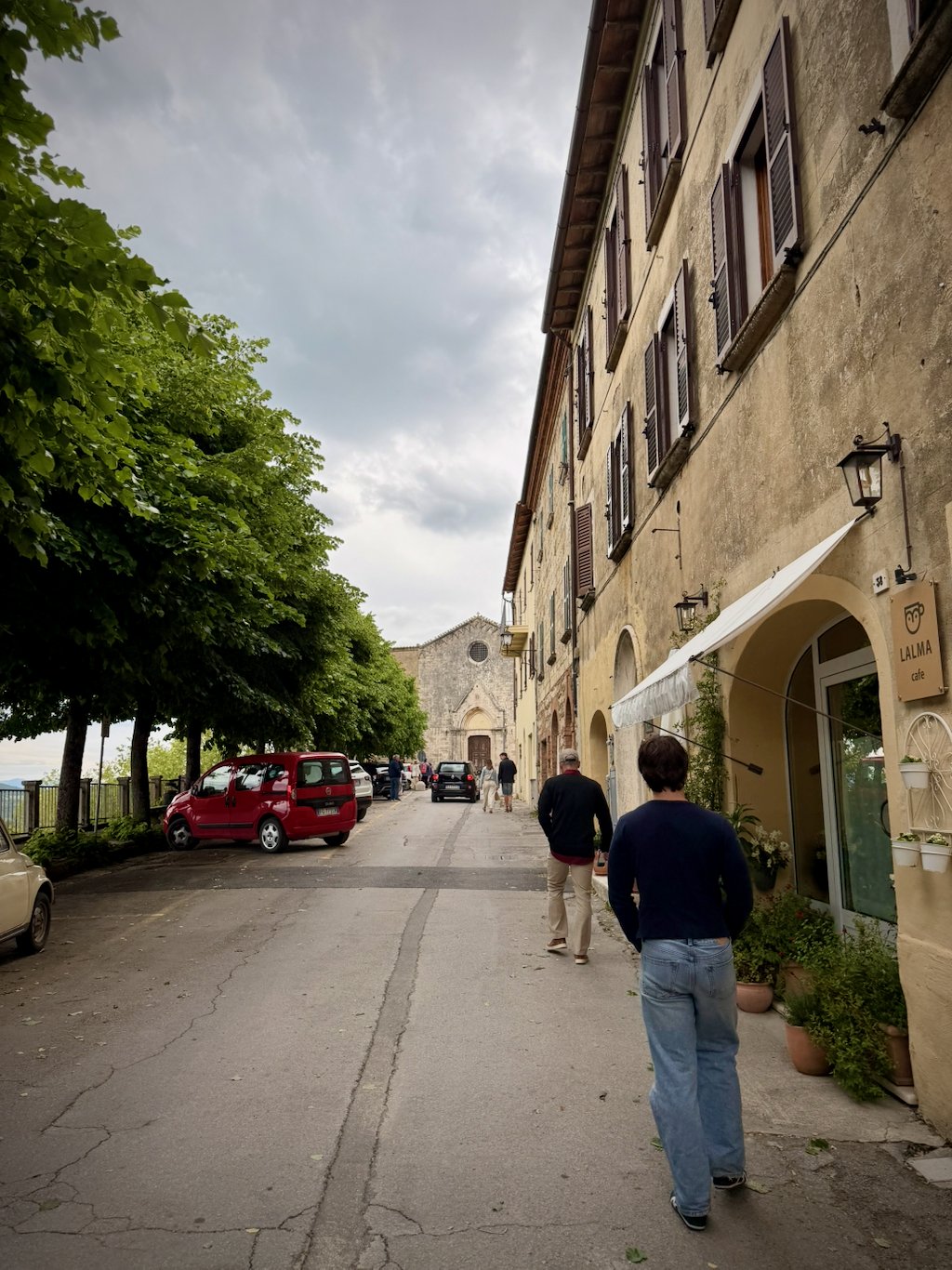
The Val d'Orcia, with Pienza and Montepulciano at either end, is the postcard. Pienza is small, quiet and inseparable from its pecorino. Montepulciano is steeper and more substantial, a dramatic hill town wrapped around its wine. The landscape between them is the reason to come.
What to do
Walk Florence, but park at Villa Costanza
The single most useful practical discovery of our trip: drive to Villa Costanza on the edge of the city, leave the car, and ride the T1 tram straight into the historic center. It removes all the stress of Florence's restricted traffic zone and hands you the city on foot, which is the only way you want it anyway.
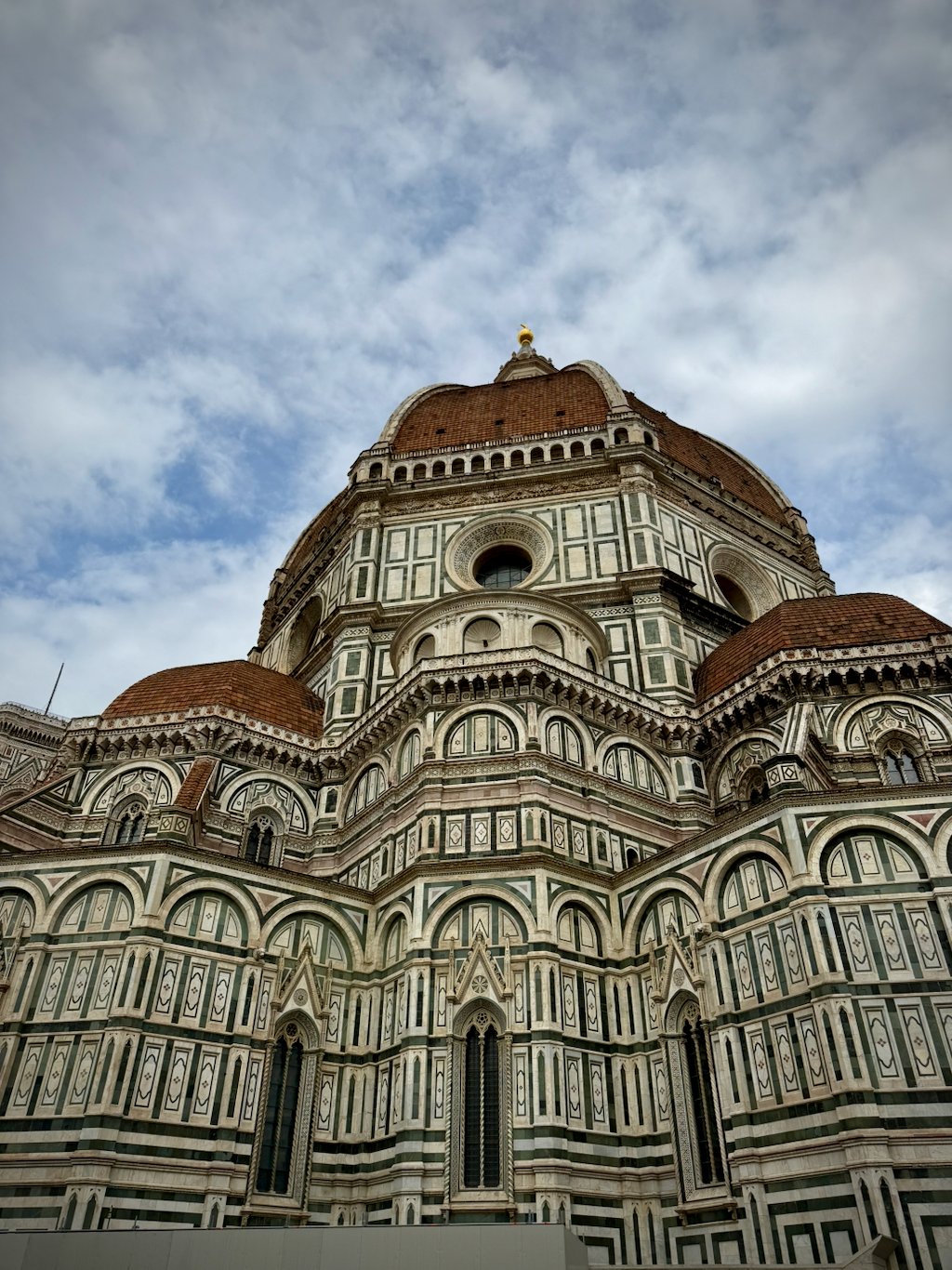
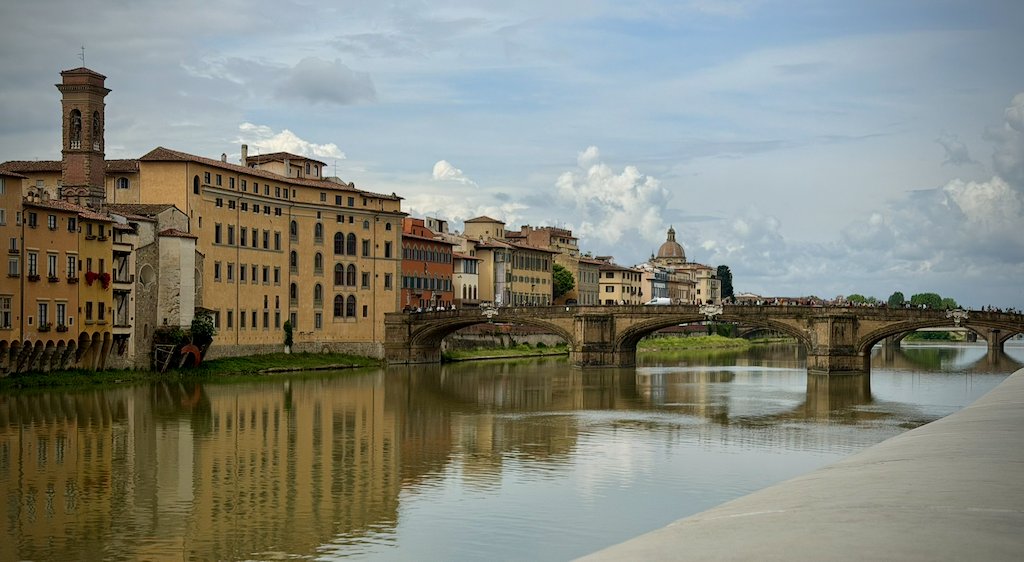
From there the day builds itself. The Duomo, Piazza della Signoria with the replica of Michelangelo's David, Ponte Vecchio, then across the river into Oltrarno. We ended at Piazzale Michelangelo for the panoramic view back over everything we had just walked.
Give Siena real time
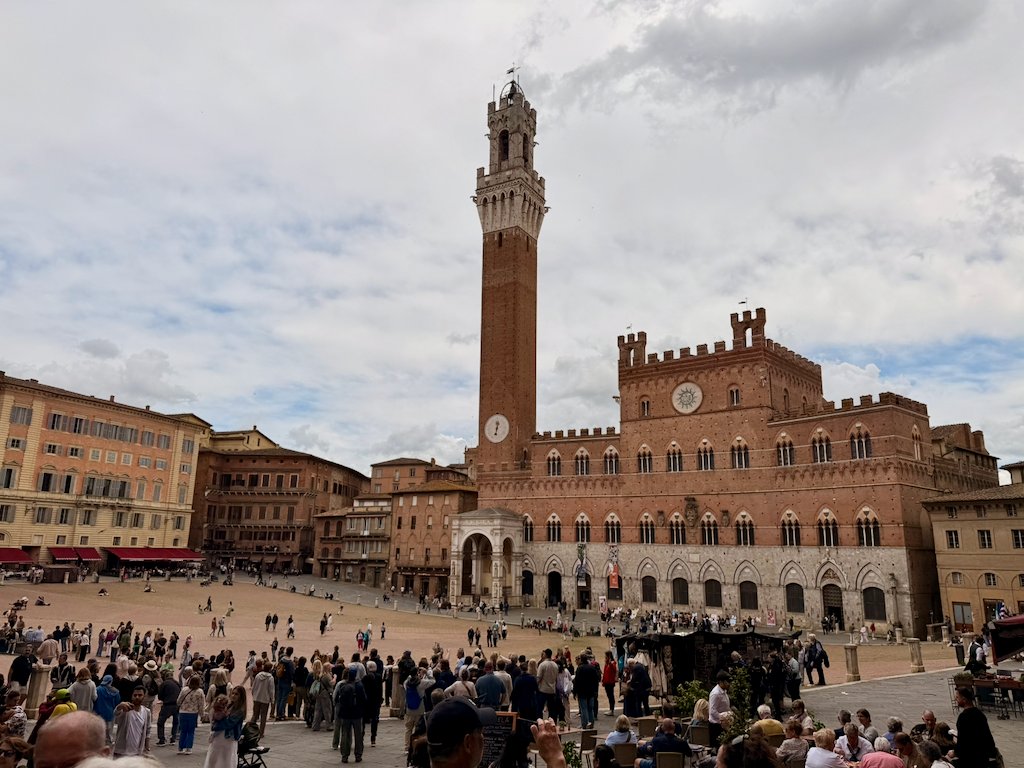
Piazza del Campo is the obvious draw, and it earns it: the shell-shaped square, Palazzo Pubblico and the Torre del Mangia create a sense of place nothing else on this route matches. The cathedral is the other headline. But what I remember just as vividly is simply walking the streets between them. Siena is the stop I would give an extra half day if I were doing this again.
Stop at Monteriggioni
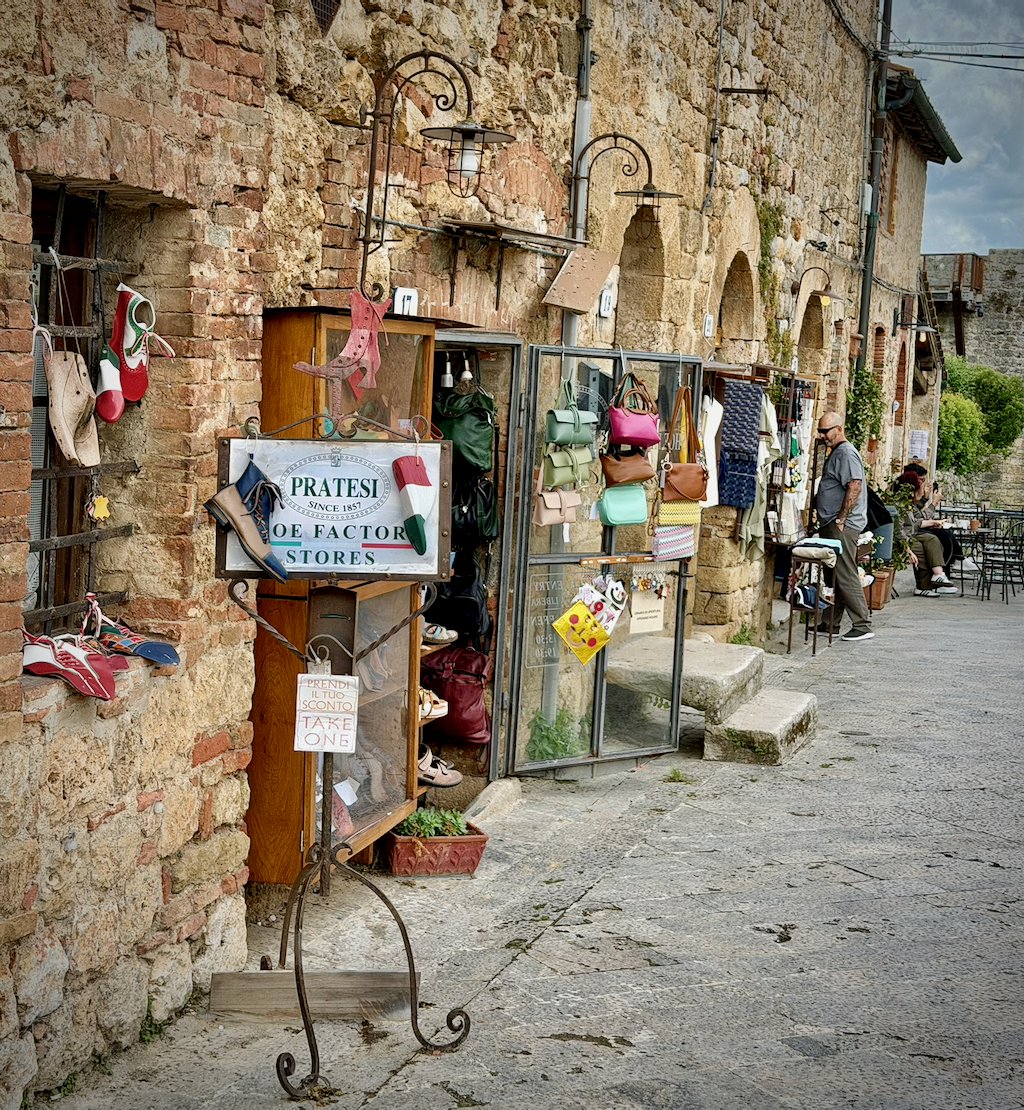
A tiny fortified village that entered our itinerary late and earned its place. Part of the experience is the approach: you see the entire walled settlement on its hill from a distance before you arrive. Park outside the walls, walk through the gate, take it in. It needs an hour, not half a day, which is exactly what makes it perfect on a driving route.
Drive the Val d'Orcia for its own sake
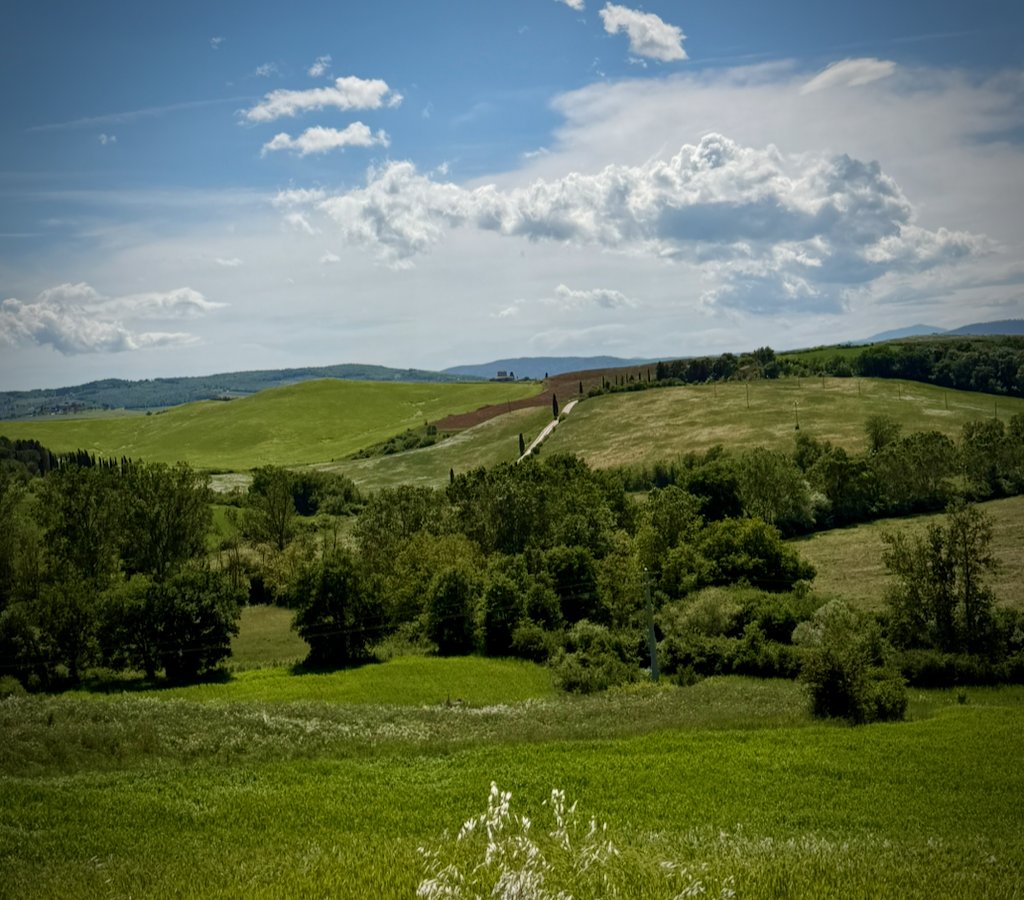
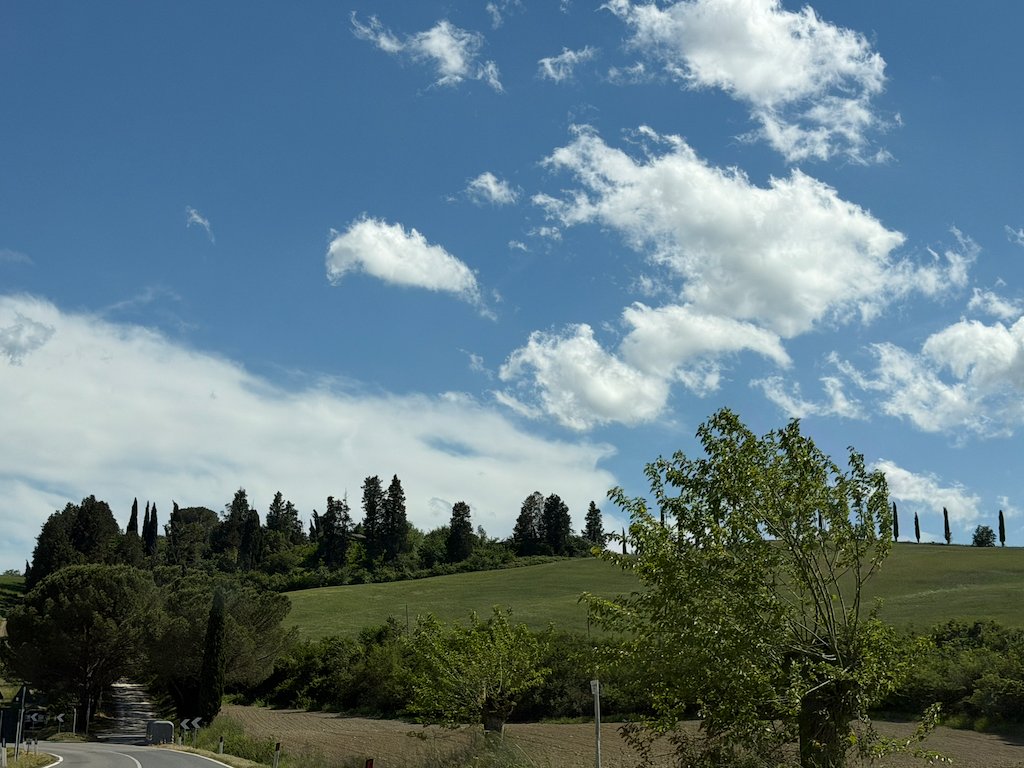
The roads between Siena and Pienza were my favorite part of the entire trip. The landscape gradually becomes the Tuscany you had in your head before you arrived: rolling hills, winding roads, cypress trees, farmhouses alone on ridgelines. Treat the drive as the attraction, not the transfer.
Two stops are worth seeking out deliberately. The small chapel of Cappella della Madonna di Vitaleta sits alone in the fields near San Quirico d'Orcia, and the cypress-lined drive at Baccoleno near Asciano is the S-curve road from every Tuscany photograph you have ever seen. Pienza itself is lovely, but the country around it is what elevated the day.
Spend a day on Chianti wine
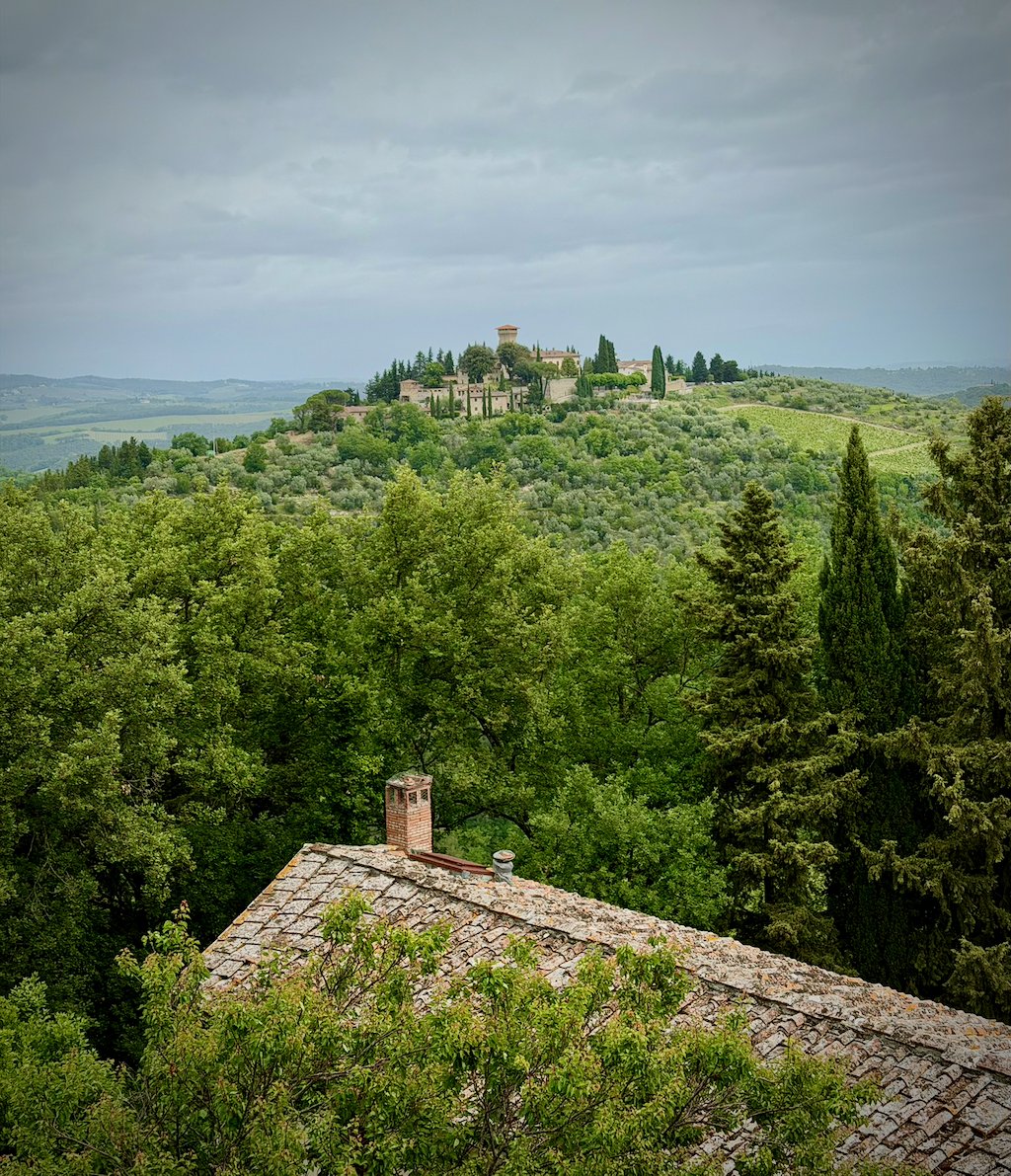
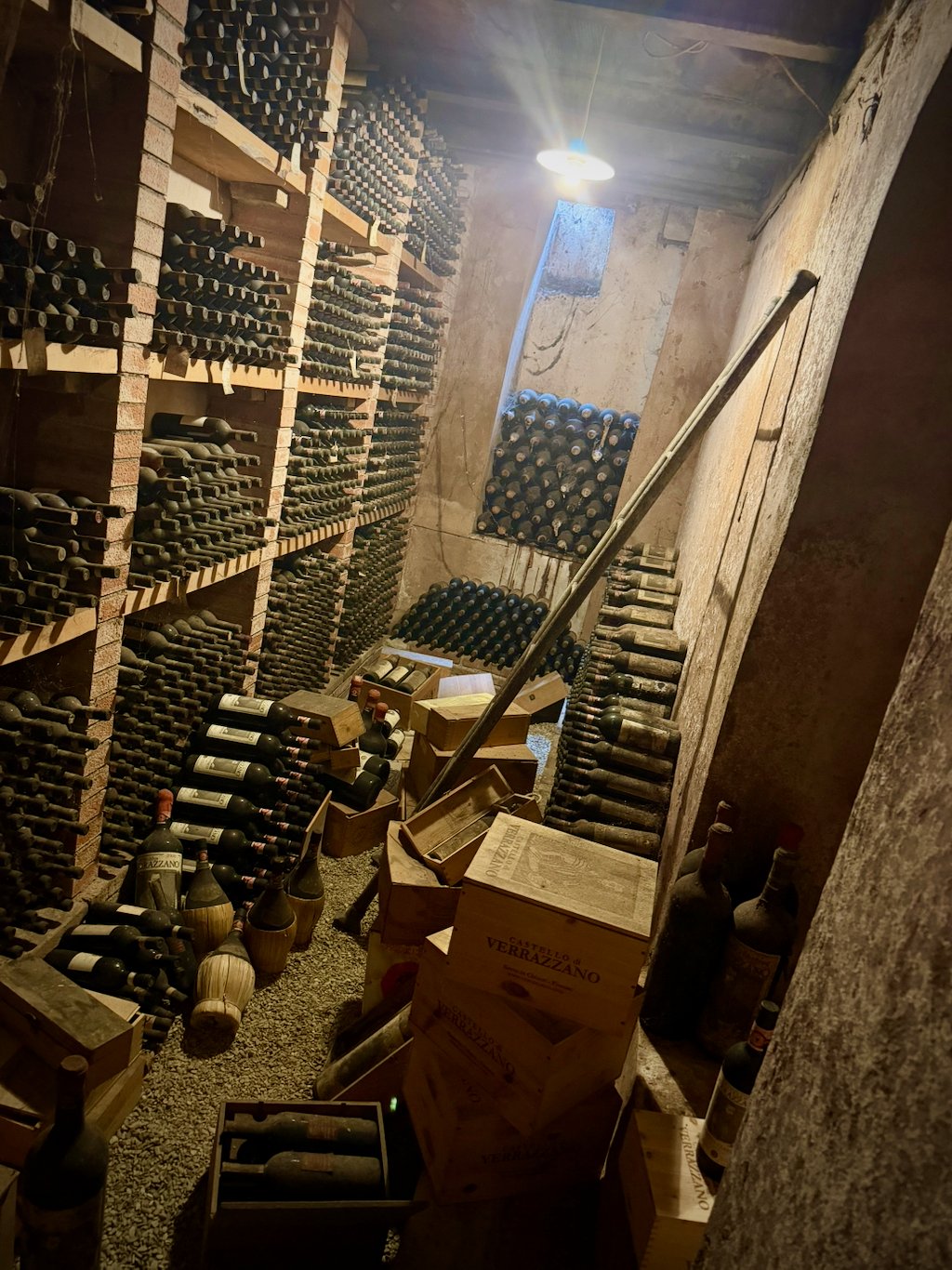
We visited two wineries in one day, Castello di Verrazzano and Antinori nel Chianti Classico, and the pairing worked because they are opposites. Verrazzano is the historic, traditional face of Chianti: castle, cellars, centuries. Antinori is a strikingly modern building expressing a wine family that goes back just as far. Neither felt repetitive after the other.
Book winery visits ahead rather than arriving on hope, especially as a group. Lunch at Antinori's restaurant became the best meal of our trip, and that story belongs in the next section.
Partner · GetYourGuideBook a Chianti winery visit on GetYourGuide
· handoff activating soonAffiliate link · Voyabello may earn a small commission, at no extra cost to you.Where to eat and drink
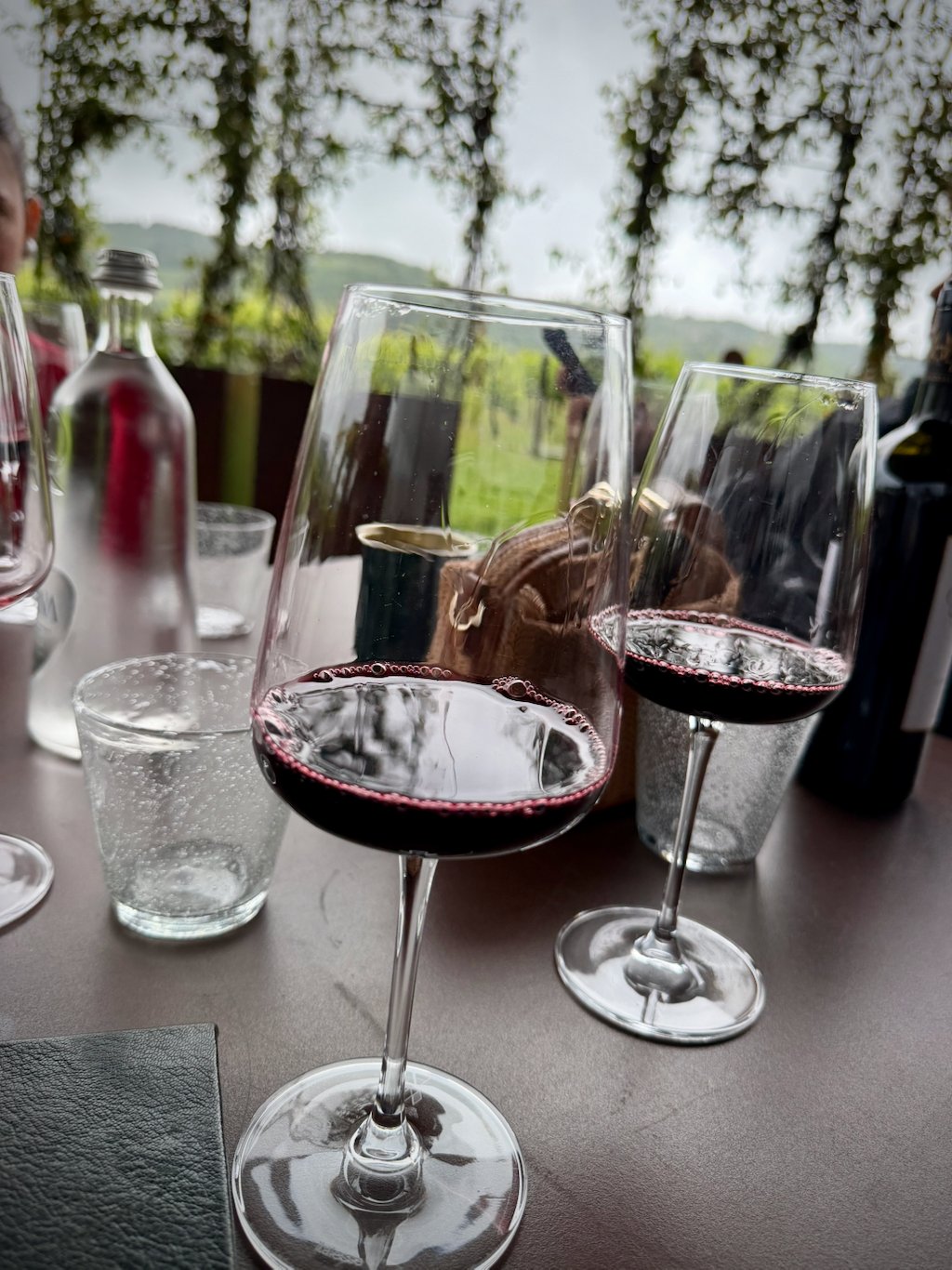
Rinuccio 1180, at Antinori nel Chianti Classico. The standout meal of the entire trip. The food was excellent, but what made it stay with us was everything around it: the wine, the architecture, the terrace looking out over Chianti while drinking what grows in it. If I could repeat one meal from ten days, this is it. Reserve ahead.
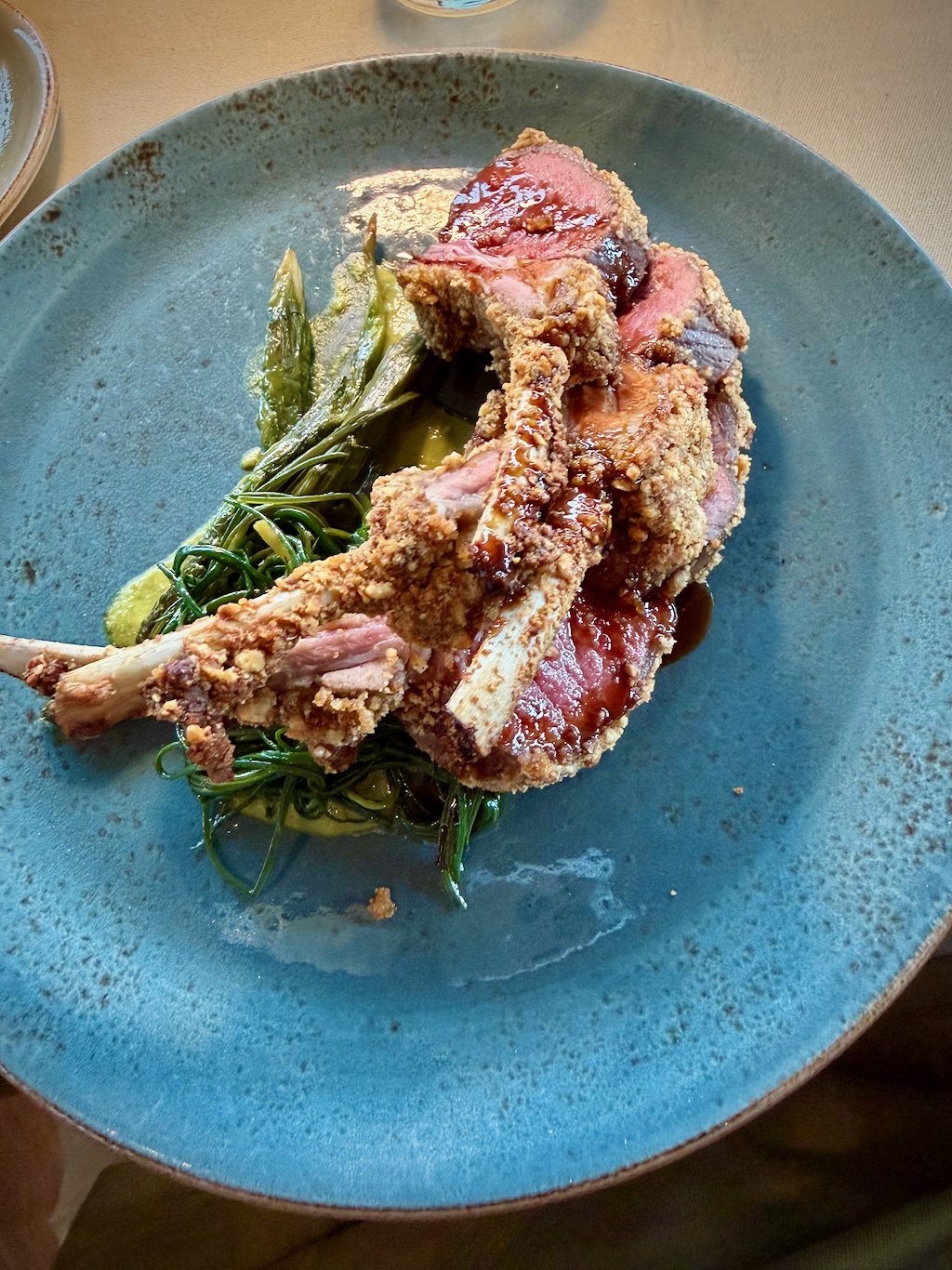
Trattoria Corrieri, Parma. If you drive south from Milan as we did, stop in Emilia-Romagna and eat where its famous ingredients actually come from. Parmigiano Reggiano and Prosciutto di Parma stop being generic "Italian food" when you eat them in Parma. We reserved a table for 12:30, which as a group of five was the right call.
Pecorino in Pienza. Food in Pienza is inseparable from sheep's-milk cheese. The shops and restaurants will not let you forget it, and you shouldn't try.
Pizza in Lucca. Not every meal needs to be a destination. Our Lucca lunch was pizza on a market morning, and it fit the slow, local character of that day perfectly.
The rule we ended up living by: don't eat "Italian food," eat what belongs to the place you're standing in. Parmigiano in Parma, pecorino in Pienza, Vino Nobile in Montepulciano, and back in Milan, cotoletta alla Milanese rather than another bowl of pasta.
One driving day worth building around
If you take one full driving day from this guide, make it this one:
Monteriggioni, then Siena, then Pienza and the Val d'Orcia, ending in Montepulciano.
It is ambitious, but it covers an extraordinary range of Tuscany in a single arc: a tiny fortified village, a great medieval city, the postcard countryside, and finally a steep wine town where the cellars connect the streets directly to the vineyards below. The stretch out of Siena toward Pienza was my favorite drive of the trip.
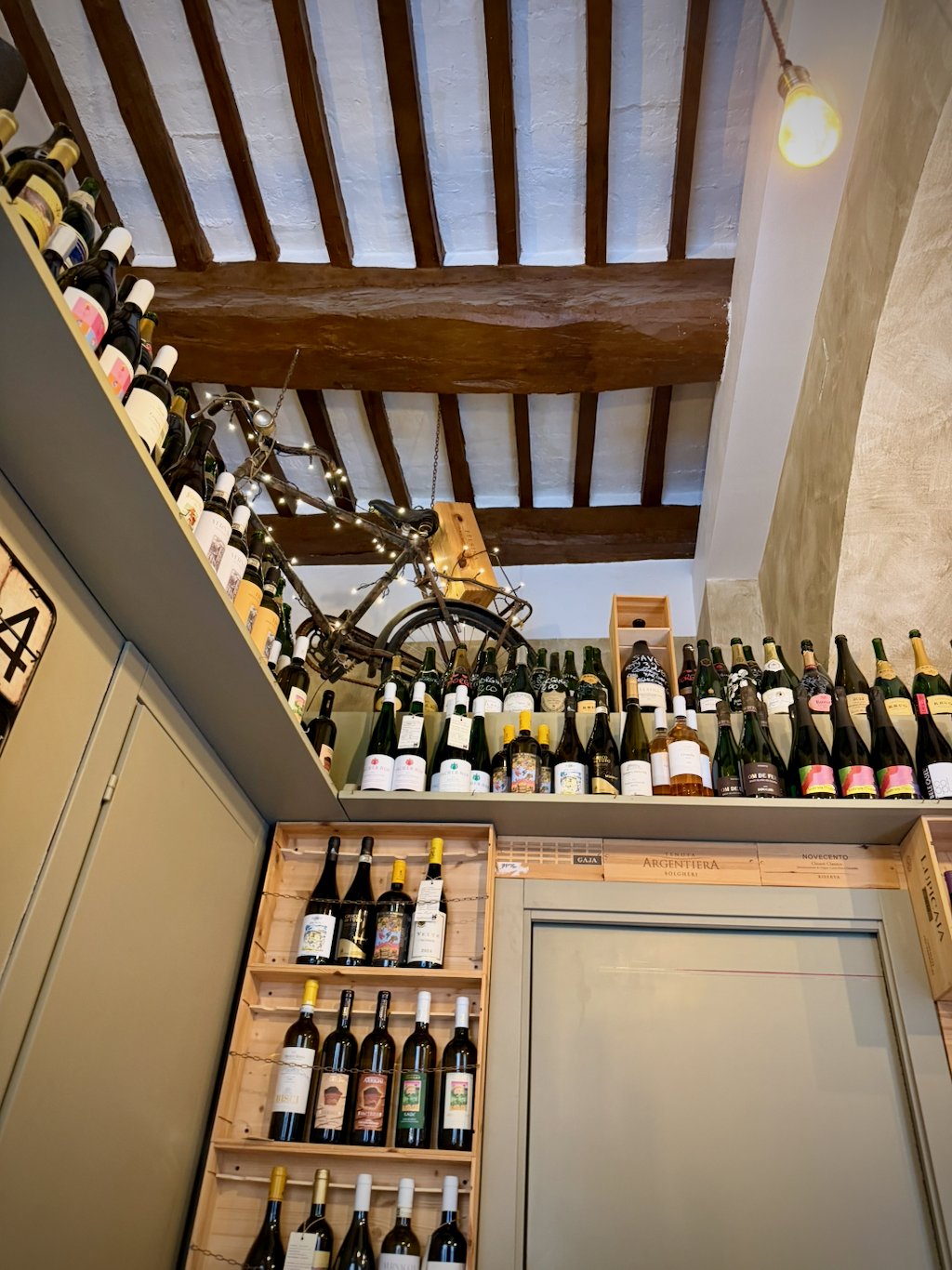
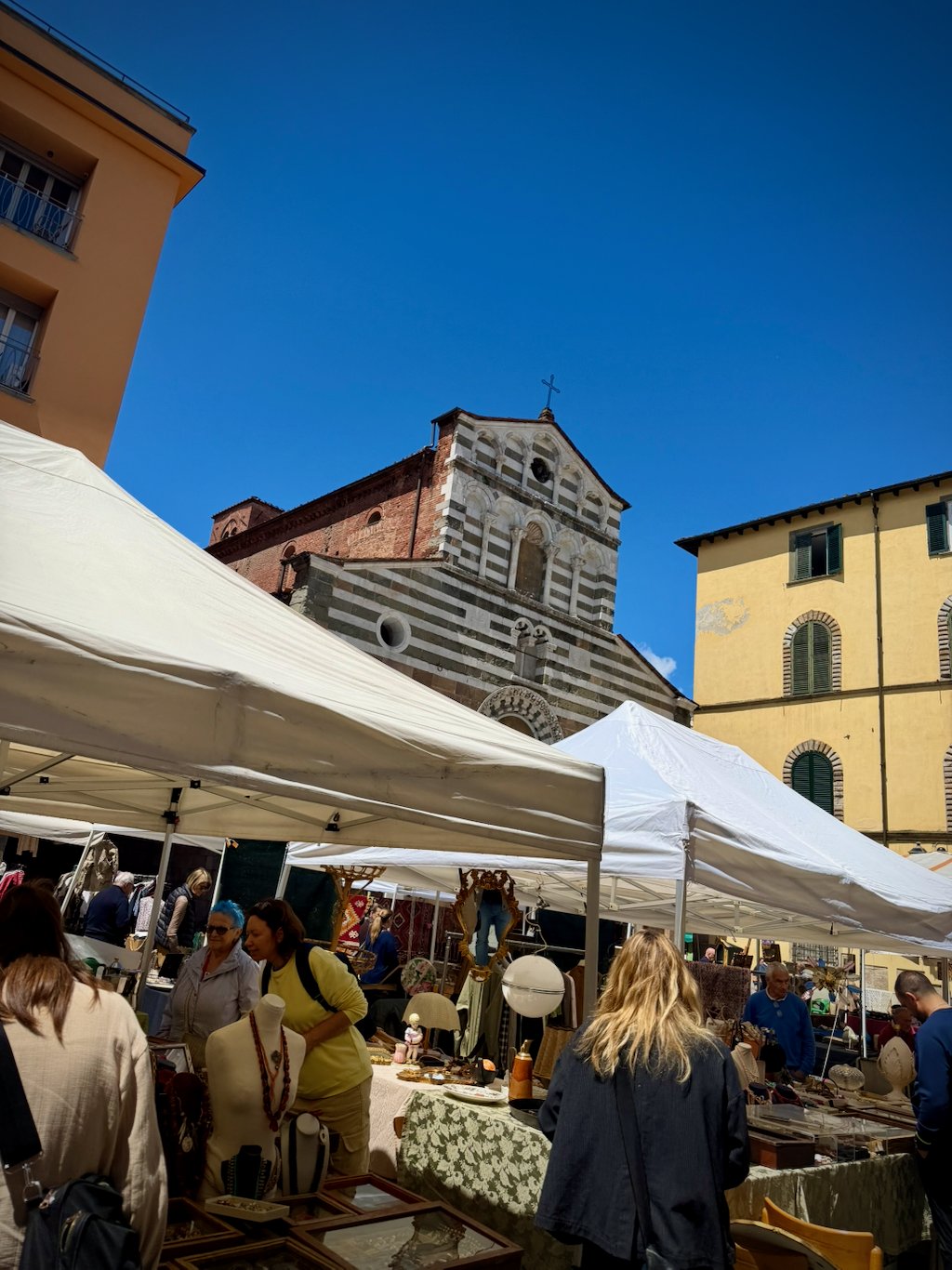
If you want a calmer version, resist the urge to swap anything in. Remove a stop instead and spend the recovered time on the road, over lunch, or in Siena. We learned this the useful way: we almost squeezed Cinque Terre into our route back north and chose Lucca instead. Lucca on a market morning, streets full of locals shopping under a cool sun, turned out to be exactly what the trip needed. Seeing more places doesn't make a better trip.
Practical notes
You want the car, and you want it outside the walls. A car is what makes this version of Tuscany possible: the countryside, the wineries, the photo stops, the small towns. It is also a liability the moment you reach a historic center. Italian cities enforce restricted traffic zones, called ZTL (Zona a Traffico Limitato), with cameras, and your navigation app will happily drive you into one. The pattern that worked everywhere: park at the designated visitor lots outside the center and walk in. Villa Costanza for Florence, Via Pietrasantina for Pisa, outside the walls near Via dei Bacchettoni for Lucca, and the visitor parking below the old towns in Siena, Pienza and Montepulciano.
Distances lie. Siena, Pienza and Montepulciano look close on a map. But every stop means parking outside the center, walking in, exploring, walking back, driving on. Add lunch, coffee, photographs and the pull-over you didn't plan because the landscape demanded it, and the day is full. Plan fewer stops than the map tempts you to.
Five people changes the math. A group our size needs a bigger rental car once the luggage is in, restaurant reservations rather than walk-ins, and attention to airport transfers, since one taxi becomes two. A countryside apartment as a single base, rather than a chain of hotels, was the decision that made the group logistics easy.
Book the things that matter. Winery visits, the important restaurant meals, and timed museum tickets. We booked the Enzo Ferrari Museum in Modena ahead on the drive south, and anyone who wants the Uffizi or the Accademia in Florence should do the same.
Opening hours, parking arrangements and ZTL boundaries change; verify the details before you go.